How to Remove an Ice Dam Safely
The safe way to remove an ice dam is limited — rake from the ground and call a pro to steam an active leak. Never climb, chip, or use flame. A step guide.
Ice Dams & Winter Water
Roof heat cables (heat tape) melt channels through ice at the eave and in gutters so meltwater can escape. They manage the symptom, not the cause, use electricity, and must be installed and used carefully — a supplement to attic fixes, not a replacement.
Heat cables melt narrow channels through the ice at your roof edge and in the gutter so meltwater has an escape route instead of pooling and backing up under the shingles. That is genuinely useful, but it is worth being clear about what it is: managing a symptom. Heat tape does not stop the warm roof that melts the snow in the first place, it runs on electricity, and it has to be installed and used with care.
Roof heat cables — often sold as “heat tape,” though it is a cable, not tape — are electrical resistance cables you run along the eave in a zigzag pattern, and frequently down into the gutter and through the downspout. When energized, they warm the surface enough to keep a thin path thawed.
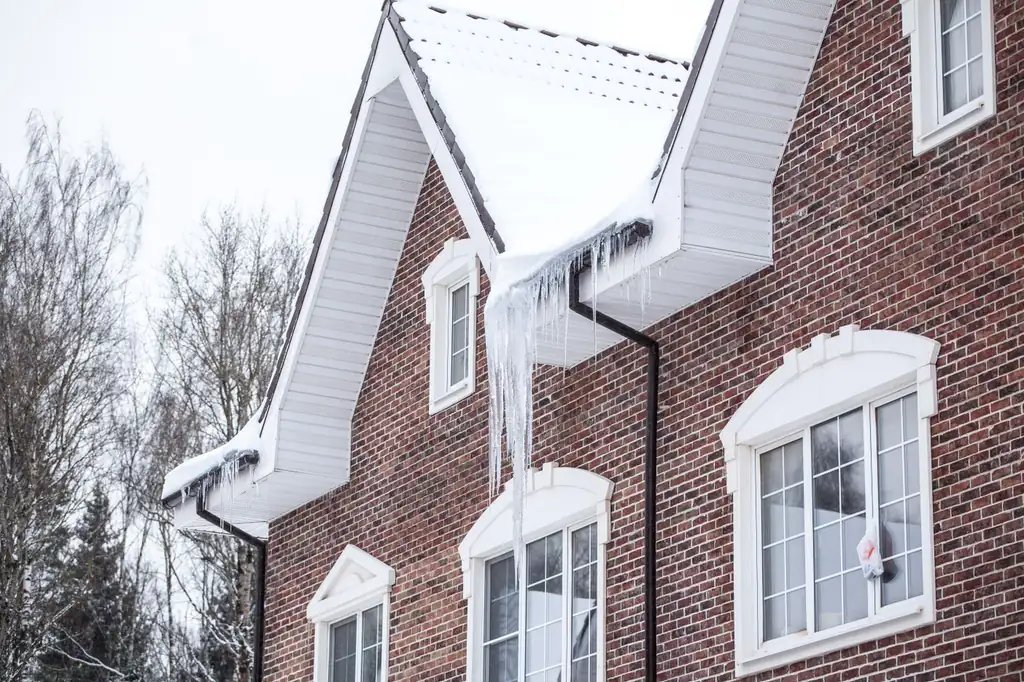
The point is drainage, not a dry roof. In a freeze-thaw cycle, snow on the warmer upper roof melts, trickles down, and refreezes at the cold overhang, where there is no living space beneath to warm it. That refrozen ridge is the ice dam, and water pooling behind it is what leaks. Heat cables carve a melted channel through that ice so the trapped water keeps moving off the roof rather than sitting and finding its way under shingles.
Done well, the cable follows the whole path: across the eave, into the gutter, and down the downspout. A cable that only warms the roof edge but dumps into an ice-choked gutter has nowhere to send the water.
This is the part homeowners most often get backwards. The root cause of an ice dam is heat escaping into the attic and warming the roof deck from below, combined with poor ventilation. Heat cables do nothing about that. They add heat on purpose, at the edge, to create a drain path through ice that your attic heat helped form.
Think of heat cables as a relief valve, not a cure. If the underlying attic problem is bad, the roof keeps generating meltwater and the cables are fighting a losing battle. The durable fix is sealing air leaks, adding insulation, and improving airflow so the roof stays cold. See our guide on how to prevent ice dams.
Where cables earn their place is a stubborn problem spot — a north-facing eave, a valley, a section over an unheatable bay — that stays troublesome even after reasonable attic work. There, cables can protect that specific area while the bigger measures do the heavy lifting.
Because heat cables are an outdoor electrical system running in wet, icy conditions, the power side deserves respect.
Routing the cable on the roof edge is often within reach for a careful DIYer, but wiring it into a safe, code-compliant circuit frequently is not. When the electrical side is uncertain, hand it to a licensed electrician.
Do not climb onto an icy or snow-covered roof. It is extremely dangerous; serious ice-dam work is a job for professionals with the right equipment.
Practically, that means the best time to install heat cables is autumn, on a dry, safe roof — not mid-storm when a dam has already formed. Trying to string cable across ice is exactly the scenario the safety warning is about.
| Consideration | Heat cables / heat tape |
|---|---|
| What they fix | A drainage path through edge ice; they limit water backup |
| What they do not fix | The warm roof and attic heat loss causing the dam |
| Running cost | Ongoing electricity whenever energized; adds up over a cold month |
| Installation | Roof routing may be DIY; electrical side often needs a pro |
| Risks | Fire/shock if wired poorly; shingle wear if overlapped or run too hot |
| Best role | Supplement for a stubborn spot, alongside attic fixes |
| Controls | Best paired with a thermostat so they run only near freezing |
Treat this as general guidance rather than a spec sheet; products and local codes vary, so read the instructions that come with your cable.
If you install cables, control when they run. A thermostat or controller that energizes the cable only in freeze-thaw conditions, rather than all winter, saves electricity and reduces wear. In deep cold there is little melting to manage, and in mild spells the roof drains on its own. Some homeowners simply switch cables on when a wet, near-freezing storm is forecast and off afterward.
Inspect the run each autumn: check for damaged jacket, loose clips, and cable that has shifted into an overlap. Replace anything cracked before energizing it.
Heat cables and gutter heat tape are a reasonable tool for keeping a drain path open through edge ice, especially at a spot that stays troublesome after you have done the right attic work. But they are a supplement, not a substitute. The lasting answer to ice dams lives under the roof, not on it — keep the attic cold and well ventilated, and let cables handle only the stubborn edges. Used carefully, wired safely, and controlled by a thermostat, they can quietly do their narrow job. Used as a shortcut around the real cause, they run up an electric bill while the dam keeps coming back.
FAQ
Not exactly. They melt channels through ice so trapped water can drain, which limits backup, but they do not stop the warm-roof melting that forms the dam. The fix for the cause is in the attic — insulation and ventilation.
Self-regulating and constant-wattage cables draw meaningful power whenever they run, and a long eave run adds up over a cold month. Use a thermostat or controller so they only run near freezing rather than all winter.
Routing the cable is often DIY-friendly, but the electrical side — a dedicated GFCI-protected circuit and correct outdoor connections — is where mistakes cause fires or shocks. When in doubt, have a licensed electrician handle the power.
Poor installation can. Cables that overlap themselves, sit under standing water, or run far too hot can stress asphalt shingles over time. Follow the manufacturer's spacing and never improvise a hotter setup.
No. They only need to run around freeze-thaw conditions. Leaving them energized through deep cold or mild spells wastes electricity and adds wear. A thermostat or manual switch tied to the forecast is better.
No. They are a supplement. If your attic leaks heat, the roof will keep melting snow and forming dams. Cables can protect a stubborn problem spot while you address insulation and ventilation.
A continuous run that carries the melt path from the roof edge down into the gutter and through the downspout is more useful than a cable that stops at the eave, because water needs somewhere to go once it melts.
Keep reading
The safe way to remove an ice dam is limited — rake from the ground and call a pro to steam an active leak. Never climb, chip, or use flame. A step guide.
Heat cable melts drainage channels through roof ice so meltwater can escape. What it does, where it helps, its limits, and why it is a symptom fix.
How to use a roof rake safely from the ground to reduce ice-dam snow, plus snow-load basics — wet snow, drifting, and when heavy load becomes a structural worry.