How to Prevent Ice Dams
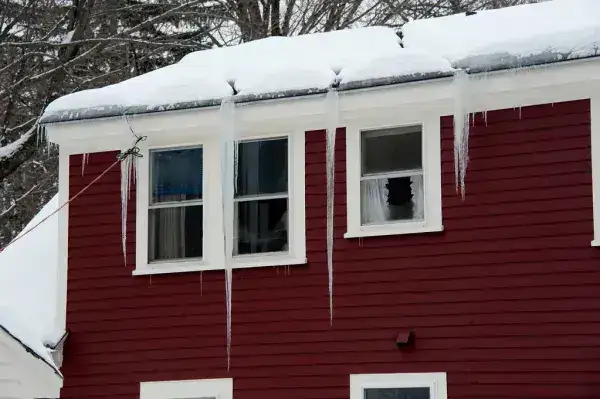
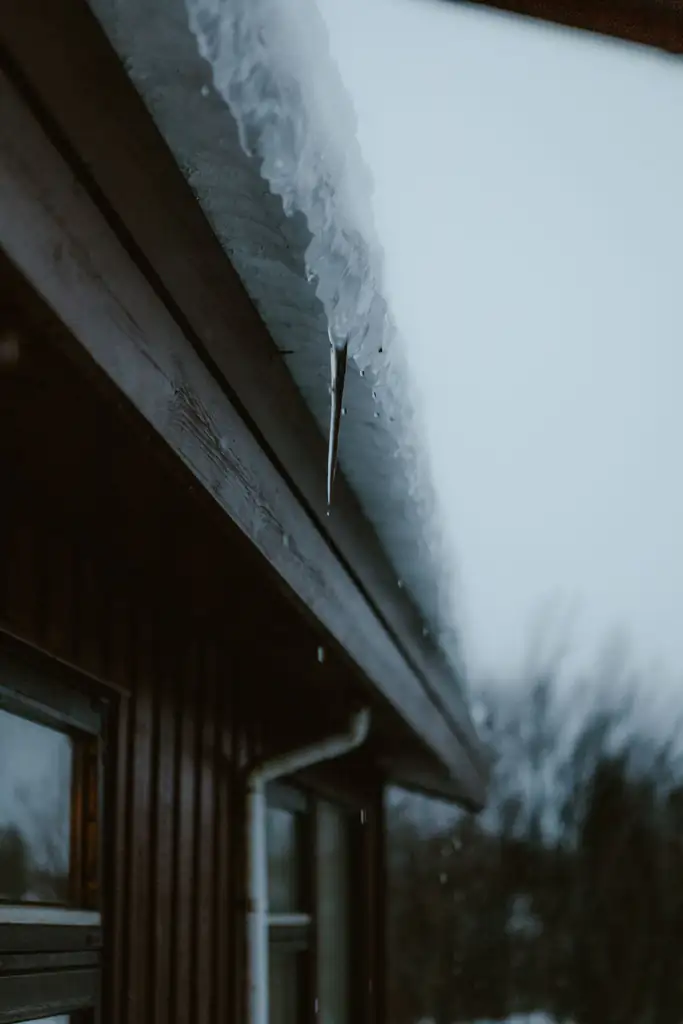
Prevent ice dams by keeping the roof deck cold — air-seal, insulate, and ventilate the attic. Snow management and clear gutters help, but the real fix is the attic.
Ice Dams & Winter Water
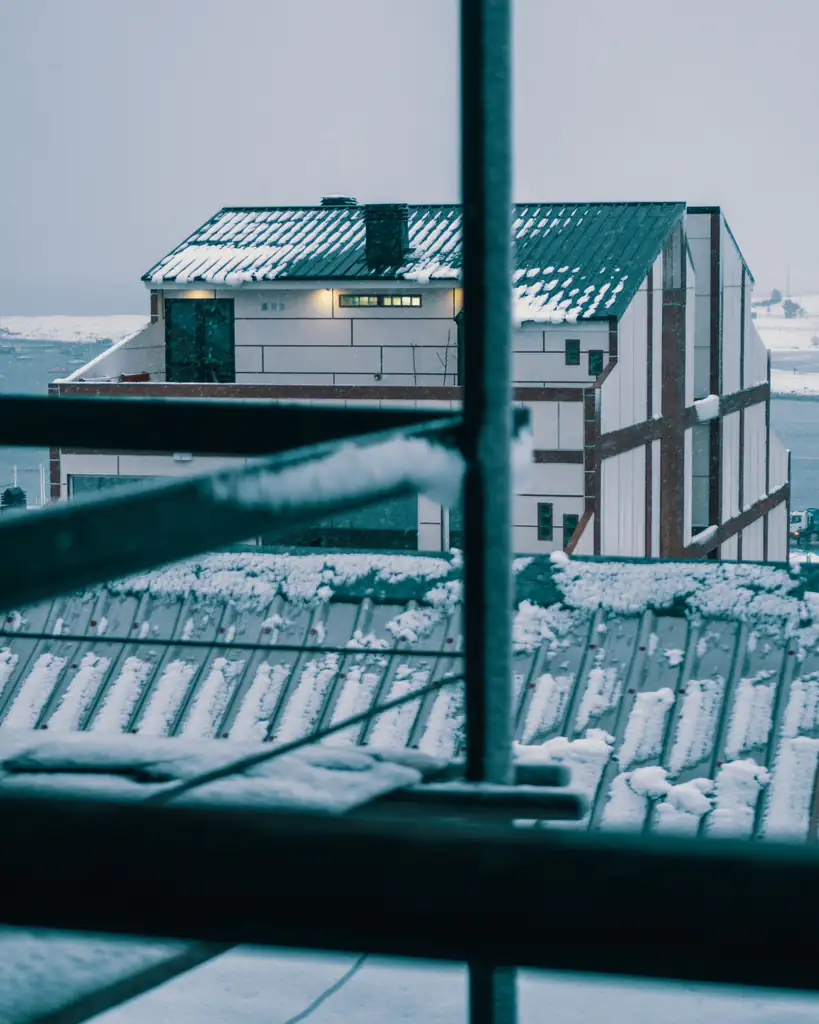
Two houses on the same street can differ because ice dams come down to heat loss and roof shape — attic insulation and air leaks, sun exposure, roof pitch and complexity, and where snow piles. The roofs that stay cold and even shed snow before it can dam.
Two houses on the same street can behave completely differently because ice dams come down to heat loss and roof shape. Attic insulation and air leaks, sun exposure, roof pitch and complexity, and where snow piles all combine to decide whether a roof stays cold and sheds snow evenly or warms up and dams. The roofs that stay dry are the ones that stay cold and let snow slide before it has a chance to back up.
An ice dam needs two ingredients. First, a roof deck warm enough to melt the underside of the snowpack. Second, a cold eave where that meltwater refreezes and builds a ridge. Everything that makes one roof dam and another stay clear traces back to how much heat reaches the deck and how the roof’s shape and exposure handle snow and meltwater. The mechanism itself is the same on every house; see how ice dams form for the full chain.
So when neighbors differ, look past the shingles. The visible roof is often the least important variable. What matters is the attic underneath and the geometry above.
This is the big one. Warm indoor air leaks up through recessed lights, the attic hatch, plumbing chases, and gaps at the top of walls, and thin or displaced insulation lets heat conduct through. Both warm the roof deck from below. A house with a well-sealed, well-insulated attic keeps its deck near outdoor temperature and rarely dams; a similar-looking house with leaks and gaps runs a warm roof all winter. Because attics are hidden, two identical facades can conceal opposite conditions. The fixes live here too, in attic insulation and ventilation for ice dams.
Which way a roof faces changes everything about its snowpack. A slope facing the winter sun may warm gently during the day and shed snow before it can dam, then refreeze harmlessly overnight with little water left. A shaded, north-facing slope holds its snow for weeks, so any meltwater from attic heat has a long, cold eave and plenty of time to build a dam. This is why one side of the very same roof often dams while the other stays clear.
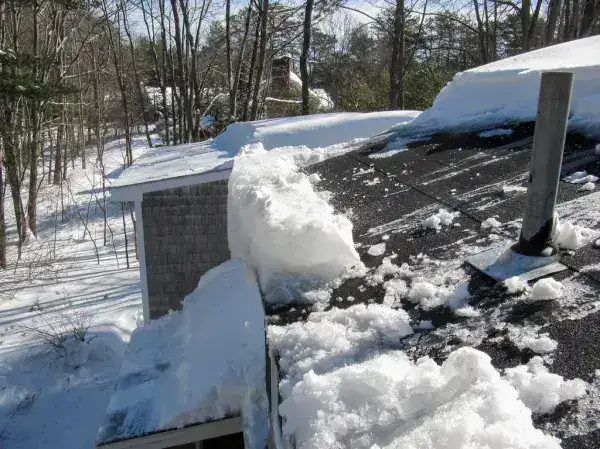
Steep, simple roofs shed snow readily and give water little time to linger. Low-slope and complex roofs do the opposite. Valleys funnel large volumes of meltwater together, dormers and intersections create cold pockets and snow traps, and shallow sections let water pool and refreeze. Every extra angle is another place for a dam to start. For related snow-load considerations and safe ground-based clearing, see roof rakes and snow load.
Wind, roof shape, and adjacent structures decide where snow accumulates. Deep drifts against a valley or a low section insulate the deck below and hold a reservoir of snow to melt, while a wind-scoured slope may barely hold any. More snow sitting over a warm spot means more meltwater feeding a dam.
Roofing material is rarely the main reason one roof dams and another does not. Material affects how snow slides off the surface, but the dam forms from attic heat underneath. A warm attic will dam under almost any covering, and a cold one usually will not.
| Variable | Roof that resists dams | Roof prone to dams |
|---|---|---|
| Attic air sealing | Tight; little warm air escapes | Leaky around lights, hatch, chases |
| Insulation | Deep, even coverage | Thin, gapped, or displaced |
| Sun exposure | Faces winter sun; sheds by day | Shaded; holds snow for weeks |
| Pitch | Steep; sheds quickly | Low; water lingers and pools |
| Complexity | Simple planes | Valleys, dormers, intersections |
| Snow load | Sheds or scours off | Deep drifts over warm spots |
The comparison is general. Real roofs mix these traits, and a single strong factor can tip the balance either way.
Put those variables together and the mystery dissolves. Your house and the one next door may share a builder and a floor plan, but one attic has original insulation settled into gaps and a dozen leaky can lights, while the other was air-sealed and topped up. One faces the morning sun and sheds; the other sits in a neighbor’s shade and holds snow. One has a simple gable; the other added a dormer that traps drift in a new valley. None of this shows from the curb, which is exactly why the difference feels baffling until you look in the attic.
Do not climb onto an icy or snow-covered roof. It is extremely dangerous; serious ice-dam work is a job for professionals with the right equipment.
The productive place to investigate is inside and from the ground, not on top of the roof. An attic inspection on a cold day, ideally when you can feel where warm air is leaking, tells you far more than anything you would learn up on the shingles.
Whether a roof gets ice dams is decided by heat loss and shape: how much warmth reaches the deck, how the sun and snow treat the surface, and how the pitch and geometry move water. Neighboring roofs differ because their hidden attics and their exposures differ. The roofs that stay clear are the ones that stay cold and shed snow before it can back up, and the way to join them is to seal, insulate, and ventilate the attic so your own deck stays cold too.
FAQ
Usually it comes down to heat loss and roof shape. Differences in attic insulation, air leaks, sun exposure, roof pitch, and where snow piles can make one roof stay cold and shed evenly while a similar one warms up and dams.
Rarely the main reason. Material affects how snow slides and sheds, but the dam itself comes from heat escaping into the attic. A warm attic will dam under almost any covering; a cold one usually will not.
Yes. A roof facing the winter sun may thaw and shed snow gently during the day, while a shaded north-facing roof holds its snowpack for weeks, giving meltwater from attic heat more time to refreeze at the eave.
It can. Valleys, dormers, and low-slope sections trap snow, concentrate meltwater, and create cold pockets where water refreezes. Simple, steep roofs shed snow more readily and give dams fewer places to start.
Identical exteriors can hide very different attics. One may have recessed lights leaking warm air, thin or displaced insulation, or a blocked vent, while the other is well sealed. The hidden attic often explains the visible difference.
Heat loss into the attic. Insulation gaps and air leaks that warm the roof deck are the most common reason one roof dams and a neighbor's does not. Roof shape, sun, and snow load then shape how that heat plays out.
Keep reading
Prevent ice dams by keeping the roof deck cold — air-seal, insulate, and ventilate the attic. Snow management and clear gutters help, but the real fix is the attic.
How ice dams really form — attic heat loss melts snow that refreezes at the cold eave. Why gutters aren't the cause, and what to do safely.
Attic insulation helps stop ice dams by keeping the roof deck cold — but only after air-sealing. The right order of air-seal, insulate, ventilate, explained.