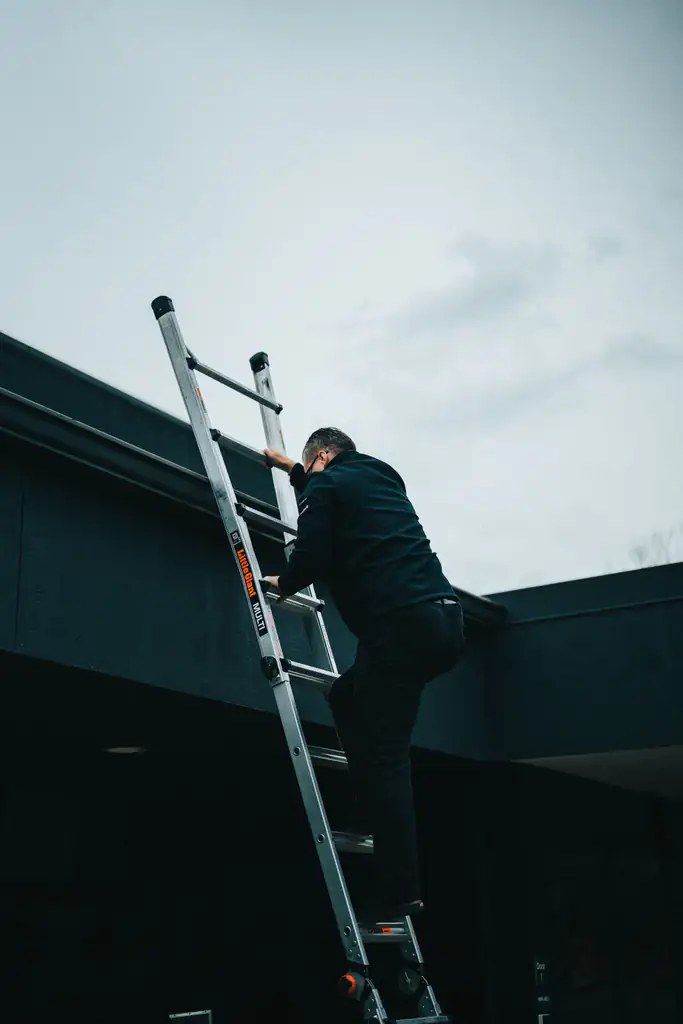
How to Flush Gutters With a Hose
How to flush gutters with a garden hose the right way: scoop first, rinse toward the downspout, and confirm each outlet drains at full flow.
Seasonal Maintenance

Clearing a buried downspout line starts at the accessible ends — the downspout inlet and the outlet where it daylights — using water flow first, then a drain snake or auger for a stubborn clog. If both ends run and the middle still backs up, the pipe is likely collapsed or root-invaded, which is a repair, not a cleaning.
Cleaning a buried downspout drain starts at the two ends you can reach — the downspout inlet at the top and the outlet where the pipe daylights in the yard. Flush with water first, then bring in a drain snake or auger if a clog holds. If you clear both ends and the middle still backs up, you are no longer looking at a cleaning job: the pipe is probably collapsed or root-invaded, and that is a repair.
Here is how to work the line safely and how to tell dirt from damage.
Before you dig into the drain, make sure the blockage is underground and not in the gutter or the downspout above ground. The tell-tale signs of a clogged buried line are water backing up at the base of the downspout during rain, water pooling or bubbling from the ground along the pipe’s path, and an outlet that runs weakly or not at all while the downspout overflows. If the trouble is higher up, our guide on why a downspout is not draining helps you trace it before you commit to the underground work.
Know your utilities before you dig. If clearing the line ever requires excavation, buried utility lines can run near drainage. Have utilities located first. And treat any water pushed toward the foundation with care — you want the line moving water away from the house, not pooling against it.
Disconnect or open the downspout where it enters the buried line, and find the outlet where the pipe surfaces. If your system has cleanouts or inspection ports, open those too — they give direct access partway along the run and make the whole job easier. Not sure where the pipe ends? Our guide to finding your drainage outlet explains where to look, and any cleanouts or inspection ports along the run give you direct access partway down the line.
Run the hose into the top of the line at full flow and watch the outlet. Loose sediment and light debris often wash straight through. Watch what comes out:
| What you observe | Likely situation |
|---|---|
| Full flow appears at the outlet | Line is largely clear; flush out remaining grit |
| Water backs up at the inlet, little at the outlet | Blockage somewhere in the buried run |
| Flow at both ends but pooling over the middle | Possible low spot, sag, or partial collapse |
| No flow and water surfacing from the ground | Significant blockage or a broken pipe |
If flushing from the top does not clear it, work from the outlet end. Debris and sediment often collect near the exit, and clearing from daylight lets you pull material out rather than pushing it deeper. Flush again from the top afterward to confirm.
For a clog that water will not move, feed a drain snake in from whichever end gets you closest to the blockage. Turn it steadily to break up compacted sediment; use a cutting head if you suspect roots at a joint. Once you feel the blockage give, flush hard with the hose to carry the loosened material out to daylight. Then run water again to verify full flow.
Once the line runs clear, reconnect the downspout. A downspout strainer at the inlet keeps leaves and coarse debris out of the buried pipe, which is one of the best ways to slow future clogs. Our note on connecting downspouts to underground drains covers doing that transition cleanly.
Every buried system is different. Pipe type, depth, length, slope, and soil all change what a snake can reach and what a flush can move. Treat this as a general method, not a guarantee that a DIY clear is possible on your particular line.
Some blockages are not dirt. A buried line that keeps failing usually has a structural cause, and no amount of snaking fixes it for long. Stop and treat it as a repair when:
At that point, the fix is locating and excavating the failed section, which is excavation and repair work. Our overview of underground downspout drainage explains how these systems are built and why certain failures are structural rather than something a hose can solve.
Clearing a buried downspout drain is a work-from-the-ends job: confirm the clog is underground, flush from the inlet, clear from the outlet, and snake through a stubborn blockage before flushing it out to daylight. Add a strainer so it stays clear. But read the line honestly — if both ends run and the middle still backs up, or the ground above it is sinking, the pipe needs repair, not another cleaning. Knowing that difference saves you from snaking the same clog every rain.
FAQ
The clearest sign is water backing up at the base of the downspout during rain, or pooling and bubbling at the ground where the line is buried. If the outlet where the pipe daylights runs weakly or not at all while the downspout overflows, the buried section is likely blocked.
At the accessible ends. Disconnect or open the downspout at the top of the line and flush water in, then check the outlet where the pipe surfaces. Working from both open ends lets you clear debris toward daylight and locate where the blockage sits.
A hose helps flush loose sediment and confirm flow, but water alone rarely clears a packed clog or roots. For a solid blockage you usually need a drain snake or auger fed in from an accessible end, with the hose used to flush out what you loosen.
A drain snake or auger long enough to reach the blockage, fed in from the inlet or the outlet. For root intrusion, a cutting auger head is often needed. If you cannot reach or break through the clog from either end, the line likely needs professional attention.
Recurring clogs usually mean sediment settling in a low spot, roots entering at a joint, a crushed section, or debris getting in because the downspout lacks a strainer. A line that clogs repeatedly after cleaning often has a structural problem rather than just dirt.
Well-designed systems include cleanouts or inspection ports that give direct access to the buried line for flushing and snaking. If yours has them, use them — they make clearing far easier. If it does not, you are limited to the downspout inlet and the outlet.
When both ends run clear but the middle still backs up, when a snake hits a hard stop that will not clear, or when the ground above the line is sunken or soggy. Those point to a collapsed or root-blocked pipe, which is excavation and repair, not cleaning.
Keep reading
How to flush gutters with a garden hose the right way: scoop first, rinse toward the downspout, and confirm each outlet drains at full flow.
A once-a-year walk of your home's whole water path — gutters to foundation — ideally in the rain, to catch drainage problems while they are still cheap to fix.
A pre-storm drainage checklist — clear gutters and downspouts, confirm discharge runs well away, check grading and drains, and remove clog risks before the rain.