What Is a Drip Edge and Do You Need One?
A drip edge is the metal flashing that guides roof runoff into the gutter and off the fascia. Learn what it does, where it goes, and whether you need one.
Roof Runoff
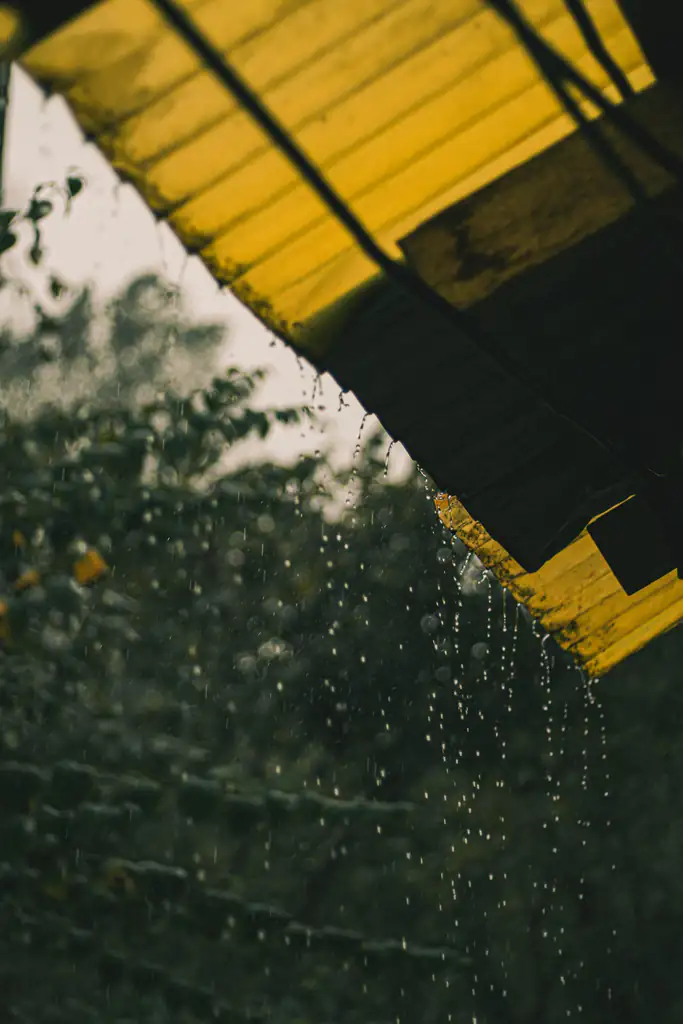
A gutter has to sit low enough to catch water yet high enough under the roof's slope line that fast runoff doesn't overshoot the back or the front. Where it hangs relative to the drip edge decides whether water lands in the trough or behind it.
The short version: a gutter has to thread a needle. It needs to sit low enough that runoff coming off the roof drops into it, but high enough and tucked far enough under the roof’s slope line that fast water does not fly over the front or sneak behind the back. Where the trough hangs relative to the drip edge is what decides whether water lands where you want it or spills where you do not.
Gutter placement sounds like it should be obvious: put the trough at the edge of the roof and let the water fall in. In practice, position is a genuine balance, and the margin is narrower than most homeowners expect.
Set the gutter too low, and runoff coming off the roof can clear the trough entirely on a steep pitch, or cling to the back edge and run down the fascia. Set it too high or too far out, and you fight a different battle. The trough has to live in the narrow zone where the water leaving the roof edge actually lands inside it. For the broader context of how water gets to that edge in the first place, see how roof runoff works.
Two variables dominate. One is the roof’s slope line, the invisible path a stream of water follows as it leaves the edge. The other is pitch: a steeper roof throws water off faster and flatter, so it travels farther out before dropping. Placement that works on a gentle roof can miss entirely on a steep one.
The single most important reference point for placement is the drip edge, the strip of metal at the roof’s edge that guides water off the roofing and, when everything is right, into the trough below.
The drip edge and the gutter have to be positioned so the water handed off by the drip edge falls into the gutter rather than behind it. If the drip edge directs runoff to a point in front of the trough’s back wall, water lands in the channel. If it hands off to a point behind the trough, or if the gutter sits low enough that water clings around the back, runoff travels down the fascia instead. Because the drip edge and the closely related gutter apron are central to this handoff, the comparison of gutter apron versus drip edge is worth reading alongside this.
The right position depends on your roof's pitch, the drip edge or apron detail, and how the fascia and roof edge were built, so there is no universal measurement. Any rule of thumb is a starting point for a pro to verify on the actual roof, not a spec to copy.
When placement is off, the water tells you in one of two ways. Understanding which one you have points to the fix.
Overshoot is water flying over the front lip of the gutter. It happens when fast runoff, common on steep roofs and in heavy rain, carries enough momentum to cross the trough and clear the front before gravity pulls it down. A gutter that sits too low or too far out from under the slope line catches less of that fast stream, so more of it escapes. In a light rain the same gutter may catch everything; in a downpour it throws water onto the ground below.
The opposite failure is water running behind the trough and down the fascia. This usually means the gutter is mounted too low relative to the roof edge, or the drip edge is not steering water into the channel, so runoff hugs the back and never enters the trough. It is sneaky because the gutter can look clean and empty while water quietly soaks the fascia behind it. If that is your pattern, the article on water that runs behind the gutter breaks down the causes and what to check.
The important thing is that these are two different problems with different placement causes. Diagnosing which one you have is the first step, because the correction is not the same.
Assessing and repositioning gutters is height work, especially on steep or tall rooflines. It can involve rehanging the trough, adjusting hangers, or correcting the drip edge, all done safely off a ladder or roof. For most homeowners this is best handed to a gutter or roofing professional.
The table below summarizes how position tends to play out. Every roof is different, so treat this as a way to reason about your symptoms, not a spec.
| If the gutter is… | Relative to the roof edge | Likely result |
|---|---|---|
| Too low | Below where runoff lands | Water clings behind, runs down the fascia |
| Too far out | Beyond the slope line’s landing point | Fast runoff overshoots the front |
| Well positioned | Under the slope line, catching the drip edge handoff | Water lands in the trough |
| Right height, bad drip edge | Trough fine, but water not steered in | Behind-the-gutter despite good position |
Notice that two of these problems are about position and one is about the drip-edge detail. That is why placement and the drip edge always have to be judged together.
Gutter placement is less about a magic measurement and more about a relationship: the trough has to sit in the narrow zone where water leaving the roof edge lands inside it, low enough to catch the flow but high and tucked-in enough that a fast stream neither overshoots the front nor slips behind the back. The drip edge is the reference that ties it all together, deciding whether runoff is handed into the channel or past it. Because pitch, the drip edge, and the roof’s construction all feed into the right position, and because the work happens at height, getting placement right is usually a job for a pro. Your part is to read the symptoms, overshoot versus behind-the-gutter, and know that a gutter can be the right size and still be in the wrong place.
FAQ
There is no single number that fits every roof, because it depends on pitch, the drip edge, and how the roof was built. The goal is a position where runoff sheds off the roof edge and lands inside the trough, not one where it overshoots the front or slips behind the back.
The drip edge is the metal strip at the roof edge that directs water off the roof and, ideally, into the gutter. Where the gutter hangs relative to that drip edge determines whether water follows the metal into the trough or runs behind it down the fascia.
That is overshoot. On a steep roof or in heavy rain, fast runoff carries enough momentum to fly across the trough and over the front lip. If the gutter sits too low or too far out, it catches less of that fast stream.
Usually the gutter is mounted too low relative to the roof edge, or the drip edge is not directing water into the trough, so runoff clings to the back and travels down the fascia. It is a placement and detailing problem more than a gutter-quality problem.
Sometimes, but it is not always simple. Repositioning may mean rehanging the gutter, adjusting hangers, or correcting the drip edge, and on a steep or high roofline that is height work. A gutter or roofing professional can assess whether a reposition or a different detail is the fix.
Yes. A steeper roof sends water off the edge faster and flatter, so it tends to reach farther out. That changes how the trough should be positioned to catch the stream, which is why steep roofs are more prone to overshoot when placement is off.
No. A splash guard is a targeted add-on for a spot, like a valley outlet, where concentrated flow overshoots. Correct placement is about the whole run. A guard treats a symptom at one point; placement addresses where the trough sits along the entire edge.
Keep reading
A drip edge is the metal flashing that guides roof runoff into the gutter and off the fascia. Learn what it does, where it goes, and whether you need one.
Water behind the gutter rots fascia and soffit even when the trough looks fine. Learn why it happens and how to stop it at the roof edge, not the gutter.
Drip edge, fascia and soffit work together at the roof edge to hand water to the gutter. Learn what each does and what goes wrong when they fail.