What Is a Drip Edge and Do You Need One?
A drip edge is the metal flashing that guides roof runoff into the gutter and off the fascia. Learn what it does, where it goes, and whether you need one.
Roof Runoff
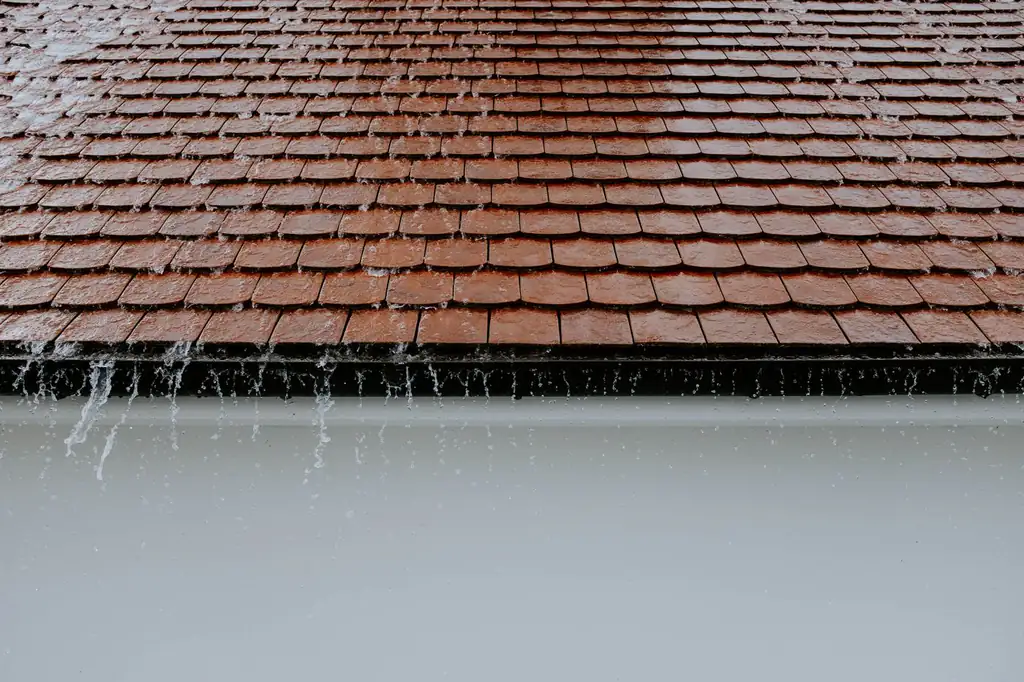
Drip edge, fascia and soffit are the roof-edge parts that hand water off to the gutter. Drip-edge flashing sends water off the deck into the trough, the fascia carries the gutter, and the soffit ventilates the eave. When any fails, water gets behind the gutter and rots the wood.
Drip edge, fascia and soffit are the three roof-edge parts that hand water off to the gutter. The drip edge sends water off the roof deck into the trough, the fascia is the board that carries the gutter, and the soffit ventilates the eave underneath. When any one of them fails, water finds its way behind the gutter and starts rotting the wood.
Stand under your roof edge and look up. The eave is a small assembly of parts that most people never think about until something drips where it should not. Understanding each one makes it much easier to diagnose a leak. For the bigger picture of how water travels off a roof, see how roof runoff works.
Drip edge is a thin strip of metal flashing installed along the edge of the roof, tucked under the shingles and lapping over the top back edge of the gutter. Its whole job is to control the last inch of the roof’s journey: it directs water off the roof deck and drops it cleanly into the trough rather than letting it curl backward under the shingles and onto the wood.
The fascia is the flat, vertical board running horizontally along the roof edge, capping the ends of the rafters. It is the trim you see when you look straight at the eave, and in most homes it is also the structural anchor for the gutter. When you fasten a gutter, you are usually screwing into the fascia.
The soffit is the underside of the roof overhang, the horizontal surface you see when you stand beneath the eave and look up. Its job is ventilation. Vented soffit lets outside air flow up into the attic at the eave, which helps manage heat and moisture so the roof structure stays dry.
These three parts form a small system. Water sheets down the roof, the drip edge catches it at the bottom and directs it into the gutter, the fascia holds that gutter steady, and the soffit keeps air moving so any incidental moisture dries out instead of lingering. To see how the trough itself fits into this chain, the overview of how gutters work is a useful companion.
When all three are intact, the transition from roof to gutter is invisible and boring, which is exactly what you want. The trouble starts when one link weakens.
Most eave problems trace back to one of the three parts failing, and because they are connected, one failure often drags the others down with it.
| Part | When it fails | What you see |
|---|---|---|
| Drip edge | Missing, short, or badly lapped | Water runs behind the gutter onto the fascia; stained or soft trim |
| Fascia | Wood rots from trapped moisture | Gutter sags or pulls away; peeling paint; spongy board |
| Soffit | Vents blocked or painted over | Stuffy attic, mildew at the eave, moisture buildup |
Without a proper drip edge, water reaching the roof edge can wick back under the shingles and run down the face of the fascia instead of dropping into the gutter. That is one of the classic causes of water behind the trough, a pattern covered in depth in water runs behind the gutter. Over time that constant trickle soaks the fascia.
Because the gutter usually hangs from the fascia, a soft, rotted board cannot hold the fasteners. The gutter starts to sag, tilt, or pull away from the house, which then disrupts its pitch and makes it overflow, which soaks the fascia even more. It is a feedback loop that gets worse the longer it runs.
If soffit vents are painted over, packed with debris, or blocked by insulation, air stops flowing at the eave. Moisture and heat build up in the attic, and dampness can settle right where the fascia and roof deck meet, accelerating rot from the inside.
These parts are interconnected, so a single symptom often has more than one cause. Peeling paint under the eave might be a drip-edge issue, a ventilation issue, or both. When in doubt, have someone inspect the whole assembly rather than treating one part in isolation.
Drip edge, fascia and soffit are a quiet team. The drip edge aims the water, the fascia holds the catch basin, and the soffit keeps the air moving. Keep all three in good shape and water leaves your roof without ever touching wood it should not. Let one slip, and the rot usually finds the rest.
FAQ
Drip edge is a thin metal flashing installed along the roof edge under the shingles. It directs water off the roof deck and into the gutter instead of letting it curl back against the fascia and rot the wood.
The fascia is the flat board that runs horizontally along the roof edge behind the gutter. It caps the ends of the roof rafters and, in most homes, is what the gutter is fastened to.
The soffit is the underside of the roof overhang. Vented soffit lets air flow into the attic at the eave, which helps control heat and moisture and keeps the roof structure dry.
Drip edge hands water to the gutter, the fascia holds the gutter in place, and the soffit ventilates the space behind them. Together they move water off the roof cleanly while keeping the edge dry.
A common cause is missing or poorly set drip edge, which lets water run down the back of the trough onto the fascia. Clogs, wrong gutter pitch, and ice can also push water behind the gutter.
Yes. The gutter usually hangs from the fascia, so if that board softens from trapped moisture, the fasteners lose their grip and the gutter can pull away or sag.
Signs include a stuffy or hot attic, moisture or mildew near the eave, and peeling paint under the overhang. Painted-over or debris-packed vents are common culprits.
Keep reading
A drip edge is the metal flashing that guides roof runoff into the gutter and off the fascia. Learn what it does, where it goes, and whether you need one.
Water behind the gutter rots fascia and soffit even when the trough looks fine. Learn why it happens and how to stop it at the roof edge, not the gutter.
Gutter placement is a balance: low enough to catch water, high enough to sit under the roofline. Here is how position decides catch versus spill.