What Is a Drip Edge and Do You Need One?
A drip edge is the metal flashing that guides roof runoff into the gutter and off the fascia. Learn what it does, where it goes, and whether you need one.
Roof Runoff
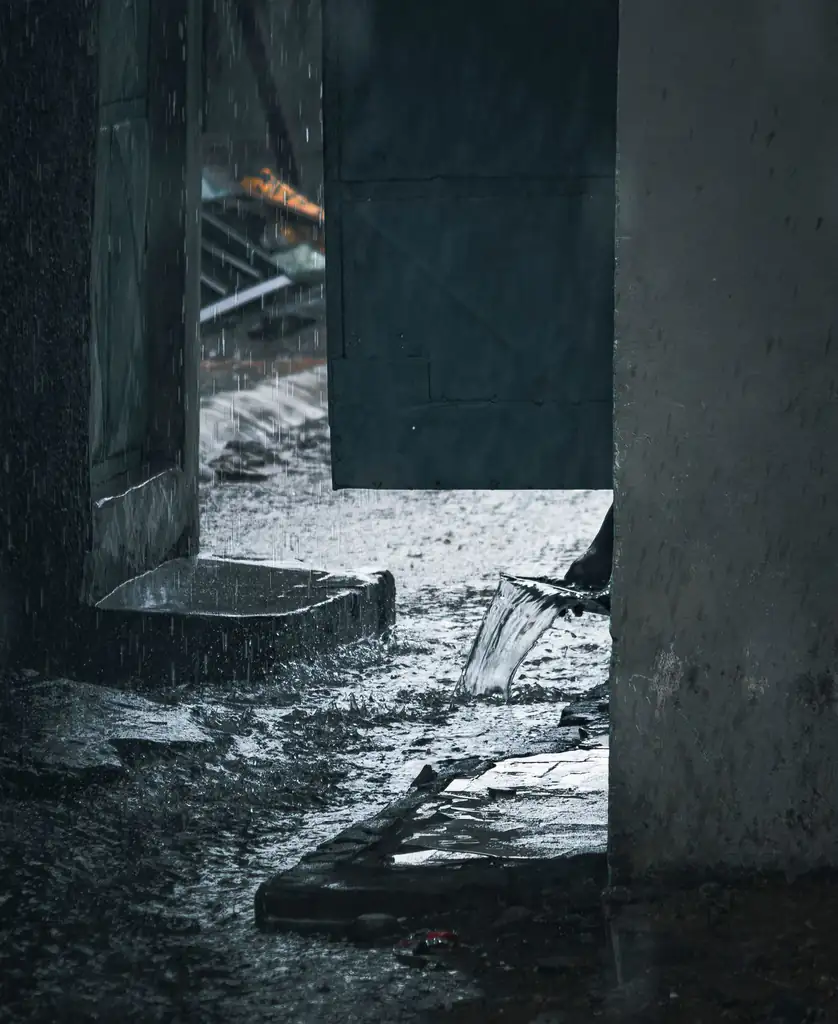
Water gets behind a gutter when the roof edge hands it off badly — usually a missing or short drip edge, a gutter hung too low, or debris backing water up under the shingles. The fix is at the edge, not the trough, and it starts with finding which of those handoffs has failed.
If water is getting behind your gutter, the fix is almost never in the gutter itself. It is at the roof edge, in the few inches where the roof hands water off to the trough. When that handoff fails — because a drip edge is missing, the gutter hangs too low, or debris backs water up under the shingles — runoff curls backward and runs down the fascia instead of dropping into the channel. Find which of those handoffs broke, and the fix follows directly.
This is one of the most misdiagnosed drainage problems there is, because the symptom appears at the gutter while the cause sits above it. Homeowners clean the trough, reseal the joints, even replace the whole gutter, and the water keeps tracking down the fascia. Understanding the handoff is what breaks that cycle.
A gutter does not catch water directly from the sky. It catches water that the roof edge delivers to it. Between the last shingle and the back of the trough there is a small gap, and everything depends on runoff clearing that gap cleanly. When it does not, water follows the underside of the roof edge — pulled by surface tension — and runs down behind the gutter and onto the fascia.
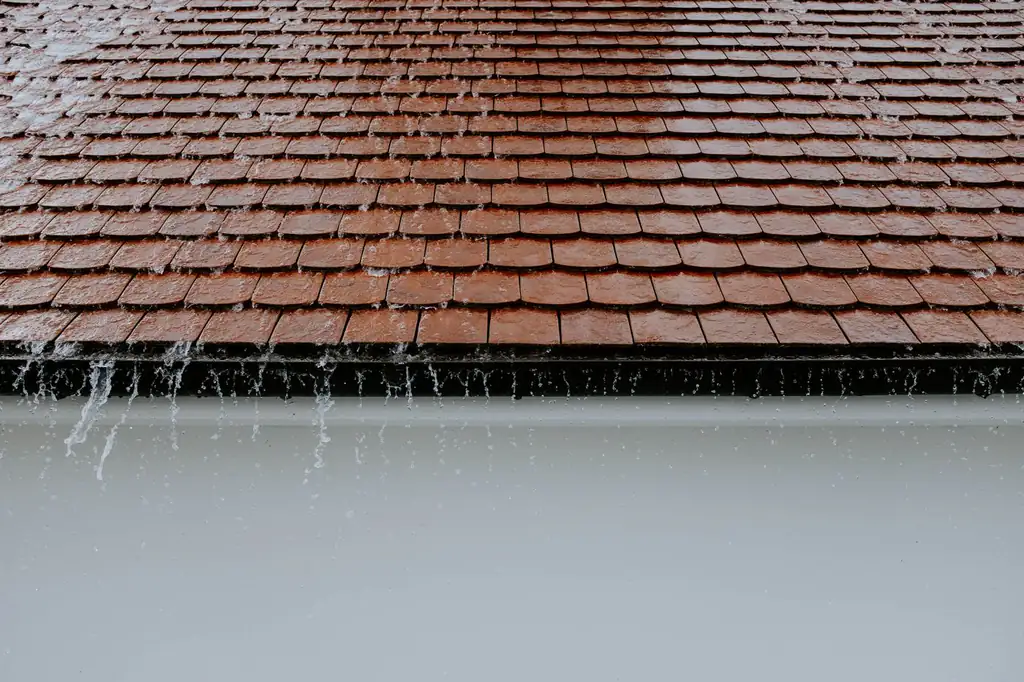
Three things decide whether that handoff works: the drip edge that projects water off the deck, the height and pitch at which the gutter hangs, and whether anything is backing water up before it reaches the edge. When one of those is off, water goes behind. Since the roof is the demand side of the whole system, it helps to picture how roof runoff works before blaming the trough hanging beneath it.
Watch the eave during real rain, not after. Where the water first goes wrong — curling at the shingle line, or slipping past the back of the trough — tells you which handoff failed. You cannot diagnose this from a dry ladder.
Drip edge is a metal flashing along the roof edge that kicks runoff outward, past the fascia and into the trough. Without it, surface tension pulls water back against the wood. Plenty of older homes were built before drip edge became standard practice, which is why the problem is so common on them. A drip edge that stops short of the gutter, or sits behind it, has the same effect as none at all. The dedicated guide to drip edge, fascia and soffit walks through how these parts are supposed to fit together.
Gutters are meant to sit just below the plane of the roof so that water shooting off the edge lands inside the trough. Hang the gutter too low and there is a gap the water can dive into behind the trough; pitch it away from the fascia and you widen that gap. This often happens when a gutter has sagged over years, or when it was installed to a fascia that was not straight.
Leaves and roof grit piled at the very back of the trough, or packed into the drip-edge gap, can dam water and force it backward under the shingles. This is the one cause a routine cleaning actually fixes — but only if debris was the real problem. If the water still tracks behind a clean gutter, the cause is structural, not seasonal.
Reverse-curve and some mesh guards steer water by getting it to cling to a surface. In a downpour, or once grit dulls that surface, water can follow the curve too far and skip the trough entirely. If the problem began right after a guard went on, the guard is the first thing to check.
| What you see | Likely cause | The fix that actually works |
|---|---|---|
| Water curls back at the shingle line | Missing or short drip edge | Add a gutter apron or correct the drip edge |
| Water slips past the back of a clean trough | Gutter hung too low or pitched away | Re-hang the gutter at the correct height and pitch |
| Problem only in heavy rain after cleaning stops helping | Debris packed in the drip-edge gap | Clear the gap; if it returns, add flashing |
| Started right after guards were installed | Guard overshooting in downpours | Adjust, replace, or remove the guard |
| Fascia already soft or stained | Long-running handoff failure | Fix the edge, then repair the wood |
The most reliable structural fix for a missing or short drip edge is a gutter apron — a wider, more angled flashing that reaches over the back of the trough and physically bridges the gap. The comparison of a gutter apron vs drip edge explains why the apron is the go-to when water is getting behind, rather than a plain drip edge alone.
Water behind the gutter is destructive precisely because it is hidden. Every storm leaves the fascia and soffit wet, and wood that never fully dries eventually peels, then rots. As the fascia softens, the screws and hangers holding the gutter lose their grip, so a neglected handoff problem slowly becomes a falling-gutter problem too. By the time the stains show up on the fascia below the trough, the damage behind it has usually had a head start. Catching the closely related symptom of water dripping between the gutter and roof early keeps a flashing fix from turning into a carpentry one.
The lesson under all of this is simple: water behind the gutter is a roof-edge problem wearing a gutter costume. Fix where the roof hands water off, and the trough beneath it can finally do its job.
FAQ
A clean trough only proves the gutter is not clogged. Water gets behind a gutter at the roof edge, before it ever reaches the trough. If the drip edge is missing or too short, or the gutter hangs too low relative to the shingle line, runoff curls back under the roof edge and runs down the fascia. The gutter can be spotless and the problem still lives a few inches above it.
A missing or improperly installed drip edge is the most frequent culprit. Drip edge flashing is meant to project runoff off the roof deck and into the trough. Without it, surface tension pulls water back against the fascia. Many older homes were built before drip edge was standard, which is why the problem shows up so often on them.
It can. Some guards, especially reverse-curve designs, rely on water clinging to a curved surface to steer it into the trough. In heavy rain or with grit on the guard, water can follow that curve too far and skip the gutter entirely, landing behind or in front of it. A guard that overshoots in downpours is worth checking if the problem started after installation.
Watch the eave during steady rain. If water curls back and wets the fascia right at the shingle line, the drip edge or its overlap with the gutter is the issue. If water clears the shingle edge cleanly but still drips between the shingles and the back of the trough, the gutter is likely hung too low or pitched away from the fascia. The point where the water goes wrong tells you which handoff failed.
Yes, and quietly. It keeps the fascia board and soffit wet after every storm, which leads to peeling paint, rot and eventually failed gutter attachment as the wood softens. Because it happens behind the trough where you cannot see it, the damage is often well advanced before the stains appear on the fascia below.
Rarely, and usually not for long. Caulk addresses a leak at a joint, not water arriving from above and behind. If runoff is coming off the roof edge in the wrong place, sealing the trough does nothing about where the water starts. The durable fixes are a gutter apron, a corrected drip edge, or re-hanging the gutter at the right height.
Some parts are DIY-friendly and some are not. Clearing debris and checking gutter pitch are reasonable ground-and-ladder tasks for a comfortable homeowner. Adding a gutter apron or correcting drip edge means working at the roof edge and lifting shingle courses, which is riskier and easy to do wrong. If the roof is steep, high, or the shingles are brittle, this is a job worth handing to a professional.
Keep reading
A drip edge is the metal flashing that guides roof runoff into the gutter and off the fascia. Learn what it does, where it goes, and whether you need one.
Drip edge, fascia and soffit work together at the roof edge to hand water to the gutter. Learn what each does and what goes wrong when they fail.
Gutter placement is a balance: low enough to catch water, high enough to sit under the roofline. Here is how position decides catch versus spill.