How to Remove an Ice Dam Safely
The safe way to remove an ice dam is limited — rake from the ground and call a pro to steam an active leak. Never climb, chip, or use flame. A step guide.
Ice Dams & Winter Water
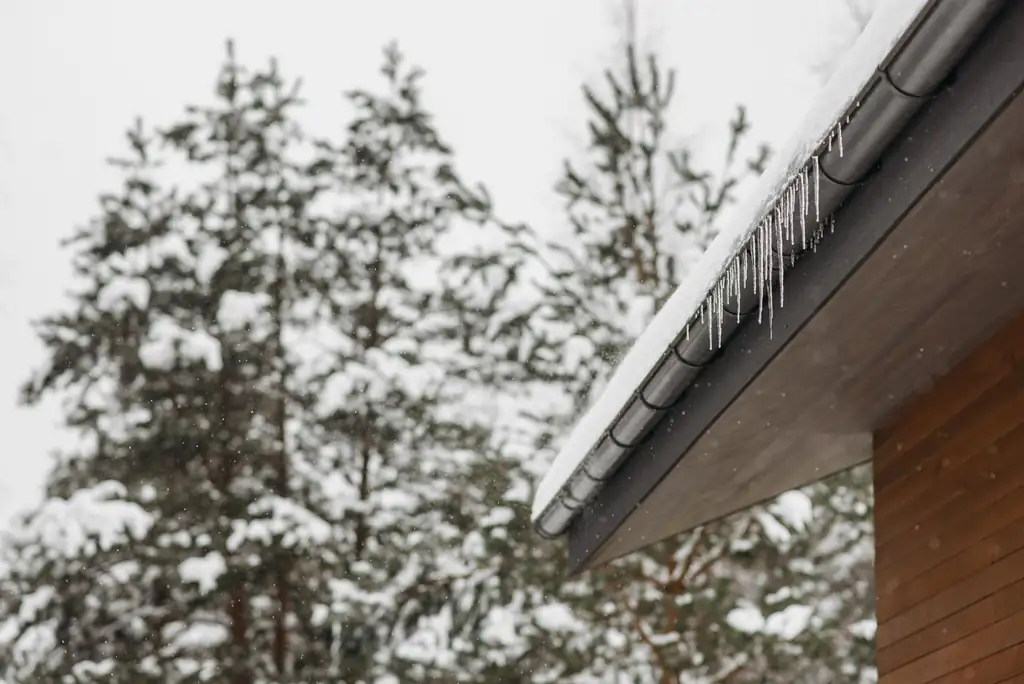
Ice dams damage a roof by forcing standing meltwater up under shingles and into the deck, loosening and lifting shingles through freeze-thaw, corroding flashing, and loading the eave and gutters with heavy ice. The roof edge takes the worst of it, and the damage compounds each winter.
Ice dams damage a roof by turning it into something it was never designed to be: a container for standing water. Meltwater trapped behind the ice backs up under the shingles and into the deck, where it soaks and eventually rots the wood. Freeze-thaw cycles lift and loosen shingles, water works at the flashing, and the sheer weight of ice strains the eave and gutters. The roof edge absorbs the worst of it, and the damage tends to compound each winter it goes unaddressed.
A sloped roof sheds water by letting it run downhill across overlapping shingles. That design is excellent for rain and for melting snow that keeps moving. It is poor at one specific thing: holding a pool of standing water in place.
When an ice dam forms at the cold eave, meltwater from the warmer upper roof runs down and collects behind the ridge of ice. Now there is a pond sitting on a surface built only to shed. Water finds the gaps between and under shingles, and from there it has a path into the structure. Everything that follows stems from this single mismatch.
This is the primary mechanism. Shingles overlap to shed running water, not to seal against a standing pool pressing up from below. Trapped meltwater wicks up and under the shingle edges, reaches the roof deck, and begins soaking the sheathing. Early on there may be no visible sign inside — the water is past the shingles but has not yet tracked far enough to show as a stain.
Water that gets into the small gaps around shingles freezes and expands, and repeated freeze-thaw cycles work like a slow pry bar. Over a winter, shingles at the eave can lift, curl, and loosen. Once a shingle no longer lies flat and sealed, it admits still more water, which speeds up the cycle. Aging or brittle shingles suffer more.
Below the shingles is the roof deck — usually plywood or board sheathing. Water that reaches it soaks the wood, and repeated wetting across winters can rot it. This matters because deck rot is structural, not cosmetic. Replacing rotted sheathing is a far larger job than swapping a few shingles, and it often is not discovered until a roof is opened up.
Flashing seals the vulnerable transitions — valleys, walls, chimneys, vents. Ice dams keep these areas wet and subject them to freeze-thaw stress, which can corrode metal flashing and break the seals over time. Because flashing guards the roof’s weak points, damage here often shows up as leaks in awkward, hard-to-trace spots.
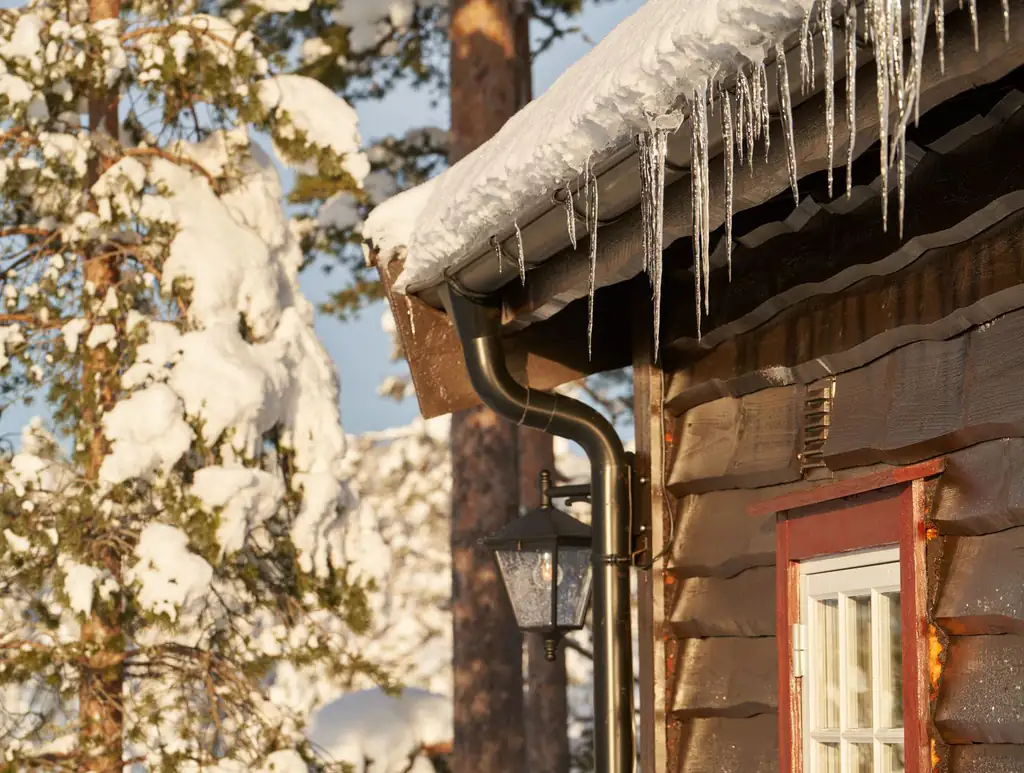
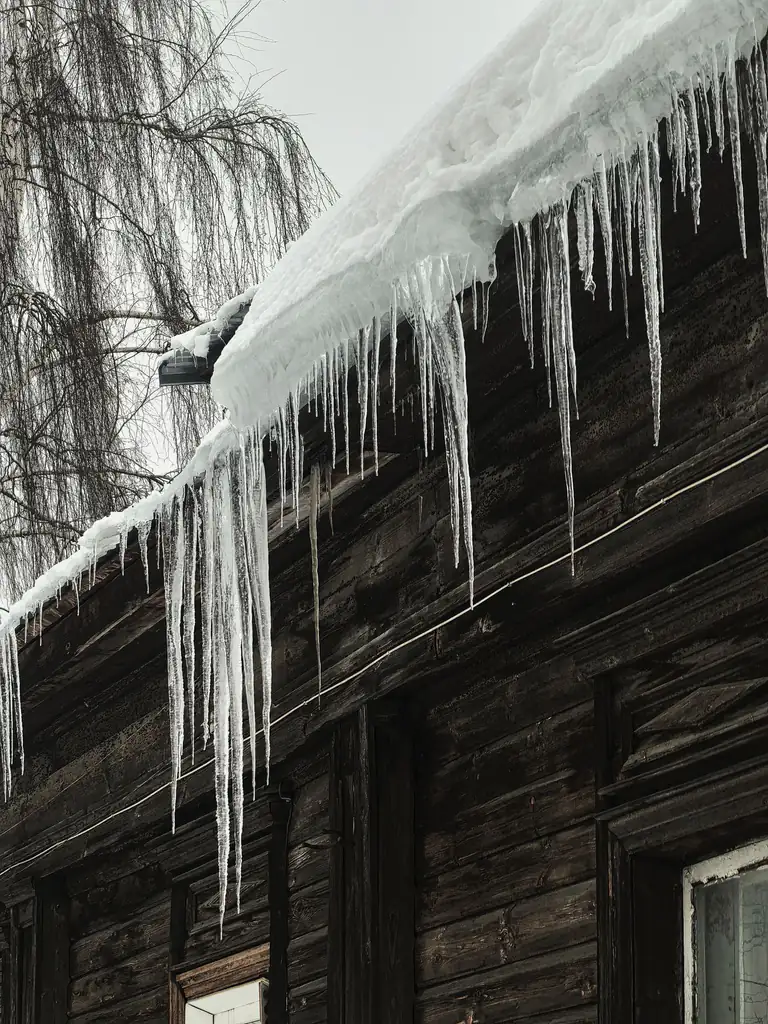
Ice is heavy. A thick ridge along the eave plus a row of large icicles loads the roof edge, the fascia board, and the gutters hanging from it. That weight can bend gutters, pull fasteners loose, and stress the fascia. This is the most visible damage from the ground and a useful signal of how much ice the edge is carrying.
| Roof component | Typical damage | Why it happens |
|---|---|---|
| Shingles at the eave | Lifting, curling, loosening | Water intrusion plus freeze-thaw prying |
| Roof deck / sheathing | Soaking, eventual rot | Water backed up past the shingles |
| Flashing | Corrosion, broken seals | Constant wetting and freeze-thaw at transitions |
| Fascia | Staining, rot, stress | Ice weight and trapped moisture at the edge |
| Gutters | Bending, sagging, pulling loose | Weight of ice and icicles |
The pattern is consistent: the roof edge and the layers just beneath the surface take the damage, working from the outside in.
A leak from ice-dam roof damage often appears well away from the dam itself, because water travels along the deck and framing before it drips. Chasing only the interior stain frequently misses the source at the eave. The real fix is upstream — stop the roof from melting snow that refreezes at the edge.
You cannot fully change a roof’s design, but you can change how much water gets past its surface and how much heat feeds the dam.
Do not climb onto an icy or snow-covered roof to inspect shingles or chip at ice. It is extremely dangerous and can damage the roof edge further. Assess from the ground, and leave roof-level work to professionals with the right equipment.
Ice dams damage roofs from the edge inward: standing water backs up under the shingles into the deck, freeze-thaw lifts and loosens shingles, flashing corrodes, and ice weight strains the eave and gutters. Most of it traces back to a warm roof melting snow that refreezes at a cold edge. Fix that cause, add a backup layer beneath the shingles, and keep off the icy roof — so this winter’s damage does not become next winter’s rot.
FAQ
They force standing water up under the shingles and into the roof deck, where it soaks the wood and can rot it. Freeze-thaw cycles lift and loosen shingles, water corrodes flashing, and the weight of ice stresses the eave. The roof edge takes the most damage.
It can shorten their life. Water working under and around shingles, combined with ice expanding in the gaps and the physical strain of freeze-thaw, lifts, curls, and loosens them. Damaged shingles then let in more water, which accelerates the problem.
Yes, that is the core mechanism. Shingles shed running water but do not seal against a standing pool. Meltwater trapped behind the dam works up and under the shingle edges and reaches the deck below, where the real damage happens.
They can. Water that gets past the shingles soaks the plywood or board sheathing underneath. Repeated wetting over winters can rot the deck, which is a structural repair rather than a cosmetic one.
Look for interior stains, damp attic sheathing or insulation, and, from the ground, lifted or curled shingles and sagging gutters at the eave. A roofer can assess the deck and flashing safely; do not climb an icy roof yourself.
A waterproof ice-and-water membrane at the eave adds a backup layer that resists water backing up under shingles. It reduces the risk of leaks but does not stop the dam from forming or the surface damage to shingles and gutters.
Both happen. A single severe storm can start leaks and lift shingles, but rot, flashing corrosion, and cumulative shingle wear usually build across repeated winters. Each unaddressed season tends to make the next worse.
Keep reading
The safe way to remove an ice dam is limited — rake from the ground and call a pro to steam an active leak. Never climb, chip, or use flame. A step guide.
How to use a roof rake safely from the ground to reduce ice-dam snow, plus snow-load basics — wet snow, drifting, and when heavy load becomes a structural worry.
Why gutters and downspouts fill with ice — clogs, poor slope, and meltwater refreezing at the cold eave. The weight risk, and the real fixes for a symptom.