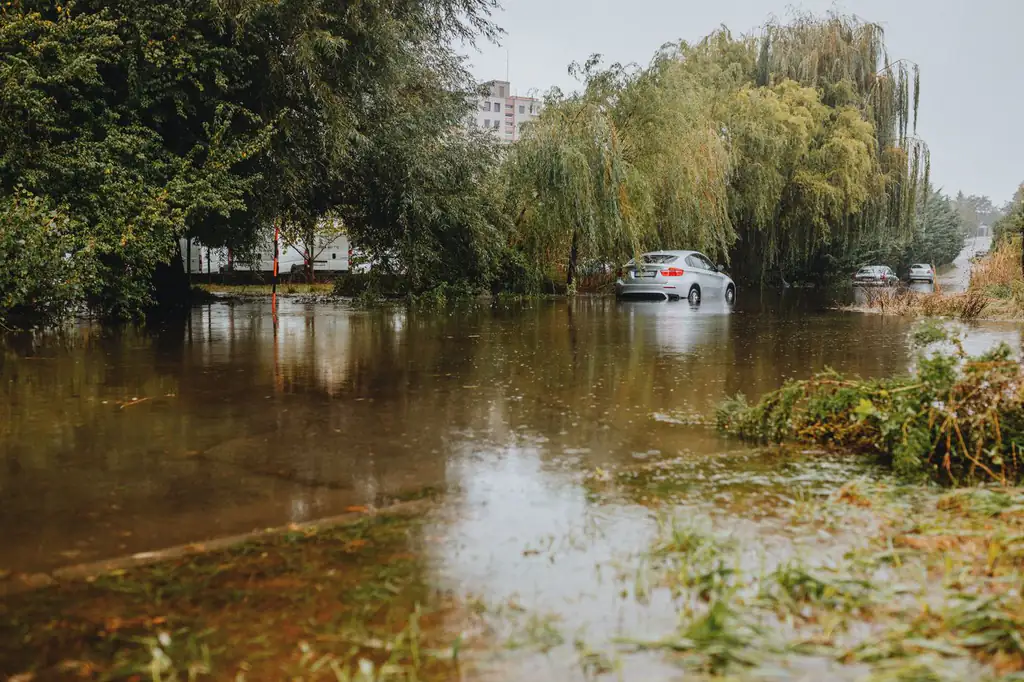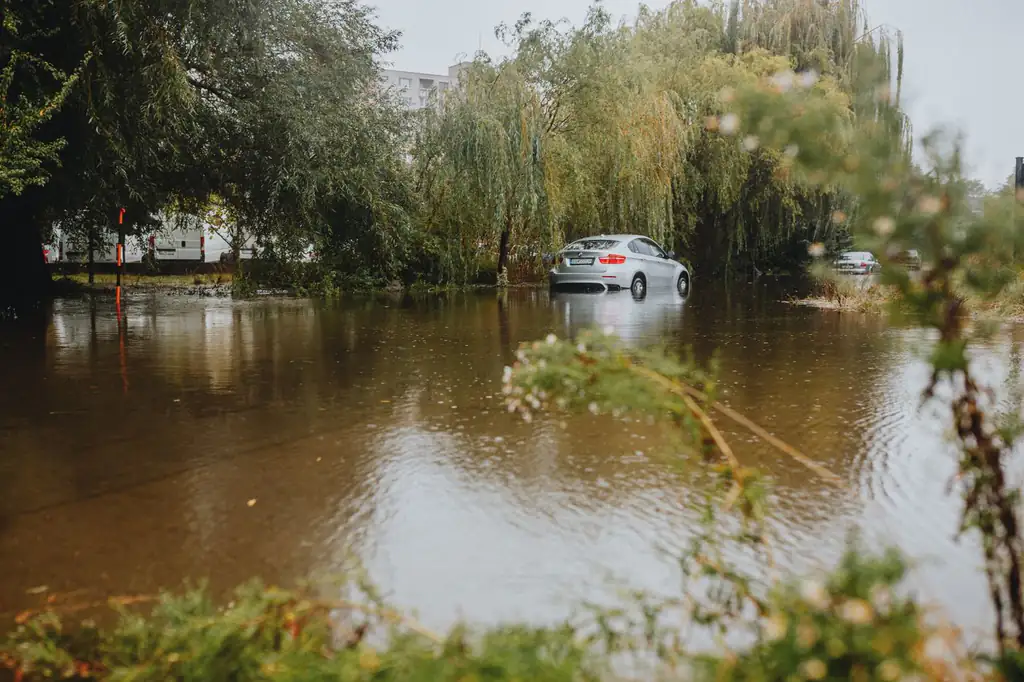
Why Is My Yard Flooding?
A yard floods when water arrives faster than the ground can absorb or shed it — from slow soil, runoff, or downspouts. Diagnose the cause before choosing a drainage fix.
Problem–Solution Hub
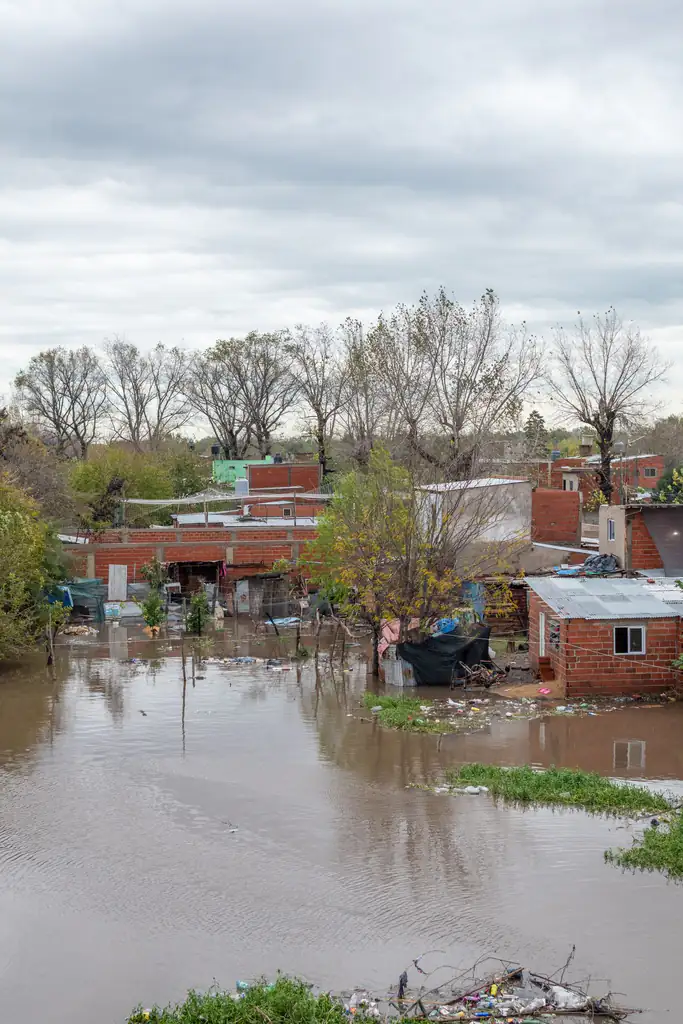
Water on the garage floor after rain almost always comes in from outside — an apron that slopes toward the door, a missing threshold seal, a downspout dumping at the corner, or runoff from the driveway. Watch where the water enters during a storm before you seal anything.
You park the car, it rains overnight, and in the morning there is a thin sheet of water spread across the garage floor just inside the door. Water in the garage after rain is almost always coming in from outside, and it is almost always a drainage problem rather than a structural one. The garage floor is usually the lowest paved surface on that side of the house, so any water the surrounding grade cannot shed tends to end up there. The short answer is that the culprit is one of a familiar few: a driveway or apron that slopes toward the door, a worn or missing threshold seal, a downspout discharging near the corner, or general runoff from the driveway. Before you seal or dig anything, the first job is to watch where the water actually gets in.
It is tempting to buy a door seal, lay it down, and hope. But garage water has a small number of causes, and each one has a different fix. A seal does nothing for a downspout dumping at the corner; regrading does nothing for a slab that leaks up through a crack. Spend ten minutes watching during an actual storm and the water will usually show you its own path — sheeting down the driveway, pooling at the threshold, running from a downspout, or seeping along a wall. That single observation is worth more than any amount of dry-day guessing.
Concrete aprons are supposed to slope away from the garage so water runs off toward the street. Over years of settling, or from an installation that was never quite right, the slope can flatten or even tip back toward the door. When it does, the whole driveway becomes a funnel aimed at the threshold. This is the most common cause and the one most likely to need real work to fix.
The rubber threshold strip or door bottom seal is the last line of defense at the opening. When it hardens, tears, or was never installed, even a small amount of water at the door gets under it. A gap here rarely creates a flood on its own, but it lets in whatever water reaches the door — so it often works together with a grading or downspout problem.
A downspout concentrates a large area of roof into one stream. If it empties near a garage corner or onto the driveway above the door, it delivers far more water to that spot than rain alone ever would, and that concentrated flow can run straight under the door. This is both the easiest cause to check and frequently the easiest to fix. Trace every nearby downspout and see where it actually discharges during rain — the same principle covered in how far downspouts should extend.
Beyond the apron itself, water arriving from higher ground — a sloped lot, a neighbor’s driveway, runoff crossing the yard — can sheet across the drive and reach the door. Here the garage is simply the low point catching water that has nowhere else to go, which is the same broad problem as standing water in the yard, only ending up on concrete.
Less common, but important to rule out: water that appears up through floor cracks or along the base of the walls, with no path from the door. That points to groundwater or hydrostatic pressure rather than surface runoff, and it is closer to a basement issue than a driveway one. Hydrostatic pressure explains the mechanism.
| What you see | Likely cause | How to confirm |
|---|---|---|
| Water sheets down the driveway toward the door | Apron sloping back toward the garage | Watch flow during rain; check with a level on the slab |
| Thin line of water right at the threshold | Worn or missing door seal | Inspect the seal; look for the entry line in a storm |
| Water enters at one corner near a downspout | Downspout discharging near the garage | Trace the downspout outlet during rain |
| Water arrives from higher ground across the yard | Runoff funneling to the low point | Watch where the water is coming from uphill |
| Water appears through floor cracks or wall base | Groundwater rising through the slab | Look for wetness with no path from the door |
The single most useful thing you can do is stand in the garage during a real storm with a flashlight aimed along the floor. The moment water starts coming in, you will see the exact line it crosses — the door, a corner, a crack. That entry point tells you which cause you are dealing with, and everything after it is easier. Diagnosing on a dry day is guesswork by comparison.
The short version: water in the garage after rain is a drainage problem, and the garage floor is simply the low point catching what the grade cannot shed. Watch a storm, find the entry line, and trace your downspouts. Once you know whether you are dealing with a sloped apron, a bad seal, a downspout, or runoff from higher ground, the right fix is clear — and often simpler and cheaper than the flood on the floor makes it look. If water rises through the slab, or the fix means cutting into concrete, that is the moment to bring in a professional.
FAQ
Because heavy rain overwhelms whatever is normally holding the water back. A driveway apron that slopes very slightly toward the door, a threshold seal with a small gap, or a downspout discharging near the corner may all cope with a light shower and then fail once the volume climbs. The garage floor is usually the lowest paved point at that side of the house, so when more water arrives than the surrounding ground and grade can shed, the overflow finds its way under the door. That is why the problem looks intermittent — it only shows up when the rate of water beats the drainage.
Usually not in the structural sense. Most garage water is surface runoff coming in under or around the door, not water pushing up through the slab or in through the walls. That makes it a grading and drainage problem far more often than a foundation one. The exception is water that seeps up through cracks in the slab or appears along the base of the walls with no obvious path from the door — that points to groundwater or hydrostatic pressure and is worth treating more like a basement issue. Watching where the water actually enters tells the two apart.
Go out during a steady rain and watch. Look at whether water sheets down the driveway toward the door, whether it pools against the threshold, whether a downspout is discharging near a garage corner, and whether any is appearing along the walls rather than the door. A flashlight along the floor at the moment water is coming in usually reveals the entry line. This ten-minute observation during an actual storm is worth more than any amount of guessing on a dry day, because the water shows you its own path.
Very easily. A downspout concentrates a whole section of roof into one stream, and if it discharges near a garage corner or onto the driveway above the door, it delivers far more water to that spot than rain alone. That concentrated flow can run straight under the door. It is also one of the easiest causes to fix — extending or redirecting the discharge away from the garage side often solves the problem with no other work. Trace every downspout near the garage before assuming you need a drain.
A new threshold or bottom seal helps when the gap under the door is the entry point, and it is a reasonable first step. But a seal fights the symptom, not the cause. If the driveway slopes toward the door or a downspout is feeding the area, water will keep arriving and eventually find a way past even a good seal, or simply pool against the door. Seals work best combined with fixing why the water is arriving — redirecting the downspout, improving the grade, or adding a drain across the apron.
A trench or channel drain set across the driveway just outside the door is the usual answer when runoff is the problem. It catches sheeting water before it reaches the threshold and carries it away to a safe discharge point. This is different from the drainage you would use for a low spot in the lawn, and it needs somewhere for the collected water to go, so it is not a drop-in fix. But where a sloped apron funnels water at the door every storm, a channel drain across the opening is often the durable solution.
Consider a pro when water appears to come up through the slab or along the wall base rather than the door, when the driveway would need regrading or a channel drain cut into it, or when the fixes you can do yourself do not stop it. Surface water from a downspout or a small threshold gap is often a DIY job. But cutting a channel drain into concrete, regrading an apron, or diagnosing water that rises through the floor calls for equipment and judgment beyond most homeowners, and getting it right the first time is cheaper than doing it twice.
Keep reading
A yard floods when water arrives faster than the ground can absorb or shed it — from slow soil, runoff, or downspouts. Diagnose the cause before choosing a drainage fix.
A driveway floods because it is a low spot or flat slope with nowhere to drain, often fed by runoff or a downspout. Find out why water collects before choosing a fix.
Water pools at a downspout when it dumps more water than the ground can take right there — from short discharge, flat soil, or a blocked line. Diagnose the cause before adding drainage.