Why Is My Yard Flooding?
A yard floods when water arrives faster than the ground can absorb or shed it — from slow soil, runoff, or downspouts. Diagnose the cause before choosing a drainage fix.
Problem–Solution Hub
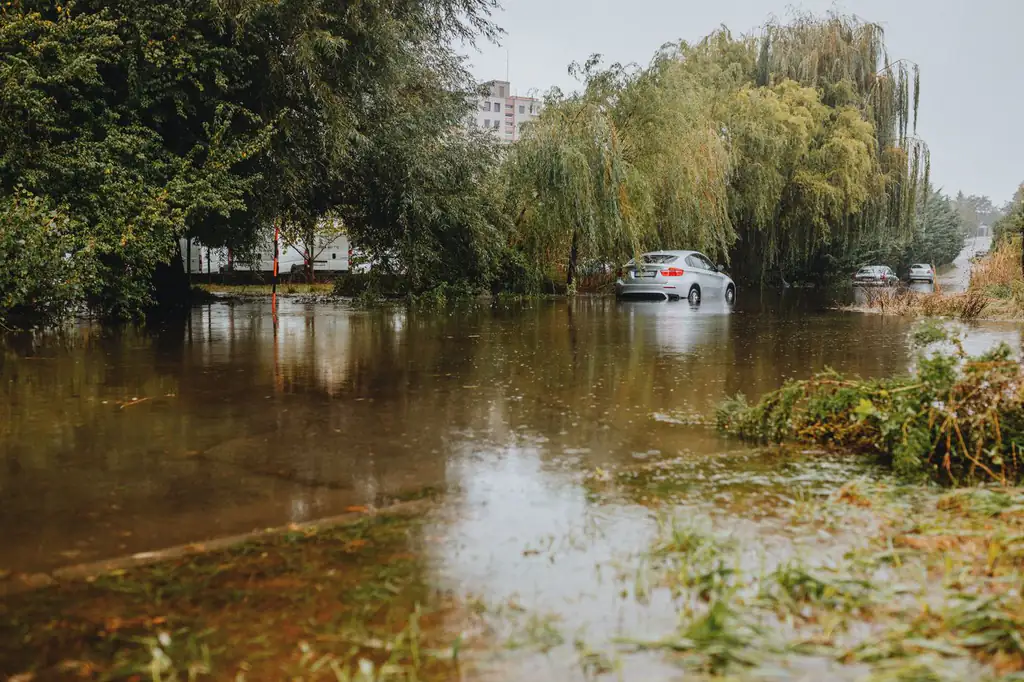
A flooding driveway is a low spot or flat slope with nowhere for water to drain, often fed by runoff from higher ground or a downspout. The fix depends on why water collects — regrading, a channel drain, or redirecting the source — so diagnose before you cut concrete.
Every storm, the same thing happens: a wide puddle spreads across the driveway and sits there long after the rain stops. A driveway floods for one basic reason — water is arriving faster than it can leave, and the low point has nowhere to drain. The short answer is that it is a low spot or an overly flat slope with a blocked or missing outlet, often made worse by runoff from higher ground or a downspout dumping onto the surface. A driveway only sheds water if it slopes toward somewhere lower, and when that path is flat, dished, or blocked, the water stays put. Before you cut into concrete or lay a drain, the job is to work out why water collects there.
A flooding driveway is really two problems stacked together: why is water arriving, and why can it not leave. A drive with a gentle dip might cope fine until a downspout starts feeding it; a drive that gets no extra water might still flood because its slope points nowhere. Sorting the arriving-water question from the leaving-water question is the whole of the diagnosis, because each points to a different fix — and installing the wrong one means cutting concrete for nothing.
If the lot slopes toward the driveway, or a neighbor’s drive or yard sheds toward yours, the driveway becomes a collection point for water that started somewhere else. Here the drive is simply the low, paved surface catching runoff — the same broad situation as a yard that stays soggy after rain, only on concrete. Where the water comes from a neighbor’s property, the picture gets more complicated, as covered in neighbor runoff and property drainage.
A downspout concentrates a large roof area into one stream. Landing on a flat or low section of driveway, it adds far more water than rain alone and pools quickly. This is one of the first things to check and often the easiest to fix — see how far downspouts should extend and splash block vs downspout extension.
A driveway needs a consistent fall toward an outlet to shed water. If the slope is too gentle, water spreads and lingers rather than running off. Long, level drives are especially prone to this.
Settling, a soft base, or an uneven pour can leave a shallow depression in the middle of the drive. Water flows to that dip and stays, forming the same puddle in the same place every storm.
Sometimes the slope is fine but the water is trapped at the bottom by a curb, a raised garage threshold, a planting bed, or a lawn edge that sits higher than the pavement. The water reaches the low end and has nowhere to go.
| What you see | Likely cause | How to confirm |
|---|---|---|
| Same puddle forms in the same dip each storm | A low spot in the surface | Check with a level; watch water gather there in rain |
| Water spreads and lingers across a long, flat drive | Slope too gentle to shed water | Run a hose and watch which way, if any, it flows |
| Water piles up against a curb, bed, or garage | Blocked outlet at the low end | Look at what the water hits when it reaches the bottom |
| Water sheets onto the drive from a slope or neighbor | Runoff arriving from higher ground | Watch uphill during rain to trace the source |
| Water pools right where a downspout discharges | Downspout dumping onto the drive | Trace the downspout outlet during a storm |
Watch the driveway during a real storm before you plan anything. In a few minutes you will see where water collects, where it comes from, and whether it has any way out. A garden hose on a dry day is a useful stand-in — run it across the surface and watch which way it flows and where it stops. These rough checks are enough to separate a low spot from a flat slope from a blocked outlet, which is exactly what you need to know before choosing a fix.
The short version: a driveway floods because water arrives faster than the low point can drain it away. Split the problem in two — why water arrives and why it cannot leave — then watch a storm and trace your downspouts. Once you know whether you are dealing with a low spot, a flat slope, a blocked outlet, or an external source, the right fix follows, and it is often cheaper than the standing water suggests. When the pavement itself needs regrading or a drain cut into it, or water is collecting against the house, that is the point to bring in a professional.
FAQ
Because the water has nowhere lower to go. A driveway sheds water only if it slopes toward an outlet — the street, a lawn edge, or a drain. When the slope is too flat, dips in the middle, or is blocked at the low end by a curb, garage, or raised bed, water collects and sits. Add runoff arriving from higher ground or a downspout and the pooling gets worse. So a flooding driveway is really two questions: why is water arriving, and why can it not leave. Answering both points you to the fix.
Not entirely. Standing water on a driveway is a nuisance and a slip and ice hazard, but it can also be a warning. Water pooling against a garage door can end up inside, and water collecting near the house side of the drive can saturate soil against the foundation. Repeated freeze and thaw of standing water also accelerates cracking and surface damage on the concrete or asphalt. So while a puddle in the middle of the drive is mostly an annoyance, one against the garage or the house is worth treating as a drainage priority.
Watch it during rain and look at the low point. See where water collects, where it is arriving from, and whether it has any path out. A puddle that forms in the same dip every storm points to a low spot; water sheeting in from a slope or a downspout points to an external source; water trapped against a curb or garage points to a blocked outlet. A level or even a garden hose run across the surface can confirm which way the slope actually falls. The goal is to separate why water arrives from why it cannot leave.
Yes, and it is one of the first things to check. A downspout concentrates a large area of roof into a single stream, and if it discharges onto or near the driveway it adds far more water than rain alone. If that water lands on a flat or low section, it pools. This is also among the easiest causes to fix — extending or redirecting the downspout away from the drive can reduce or clear the flooding with no work on the concrete itself. Trace every downspout near the driveway before planning a drain.
A channel or trench drain set across the low point or the bottom of the drive is the usual answer. It catches sheeting and pooling water in a long slot and carries it away to a safe outlet. This differs from a catch basin, which collects water at a single point, and from yard drainage meant for soil. A channel drain suits the linear way water crosses a driveway. But like any drain it needs somewhere for the water to go, so plan the discharge before cutting the slot.
Some causes, yes. Redirecting a downspout, clearing a blocked edge, or adding a surface channel on top in mild cases can be DIY. But regrading a driveway, cutting a channel drain into concrete or asphalt, or resurfacing to restore slope are jobs that call for equipment and experience, and mistakes are expensive to undo. A reasonable approach is to handle the easy source fixes yourself, and bring in a professional if the problem is the slope of the driveway itself or requires cutting into the surface.
Consider a pro when the driveway itself needs regrading or resurfacing, when a channel drain must be cut into the concrete, when water is pooling against the garage or foundation, or when the source is runoff from higher ground that needs a broader drainage plan. Those go beyond redirecting a downspout or clearing an edge. A pro can also tell you whether the slope can be corrected with a drain or whether a section needs to be repoured, which affects the cost enough to be worth knowing before you start.
Keep reading
A yard floods when water arrives faster than the ground can absorb or shed it — from slow soil, runoff, or downspouts. Diagnose the cause before choosing a drainage fix.
Water on the garage floor after rain usually enters from outside — a driveway that slopes in, a bad threshold seal, or a downspout at the corner. Find the entry point first.
Water pools at a downspout when it dumps more water than the ground can take right there — from short discharge, flat soil, or a blocked line. Diagnose the cause before adding drainage.