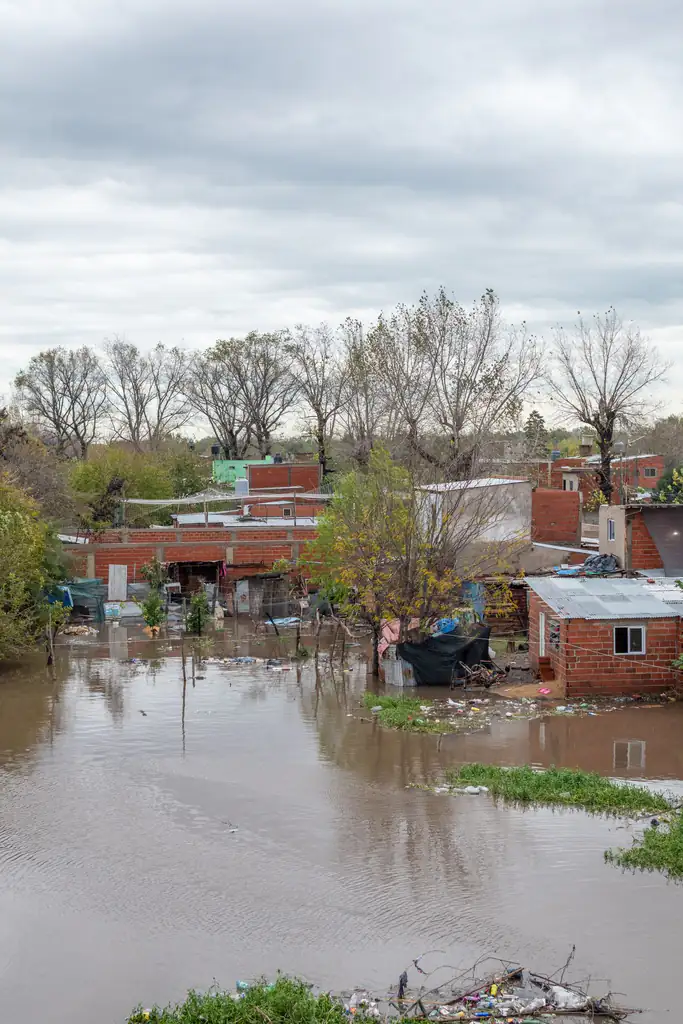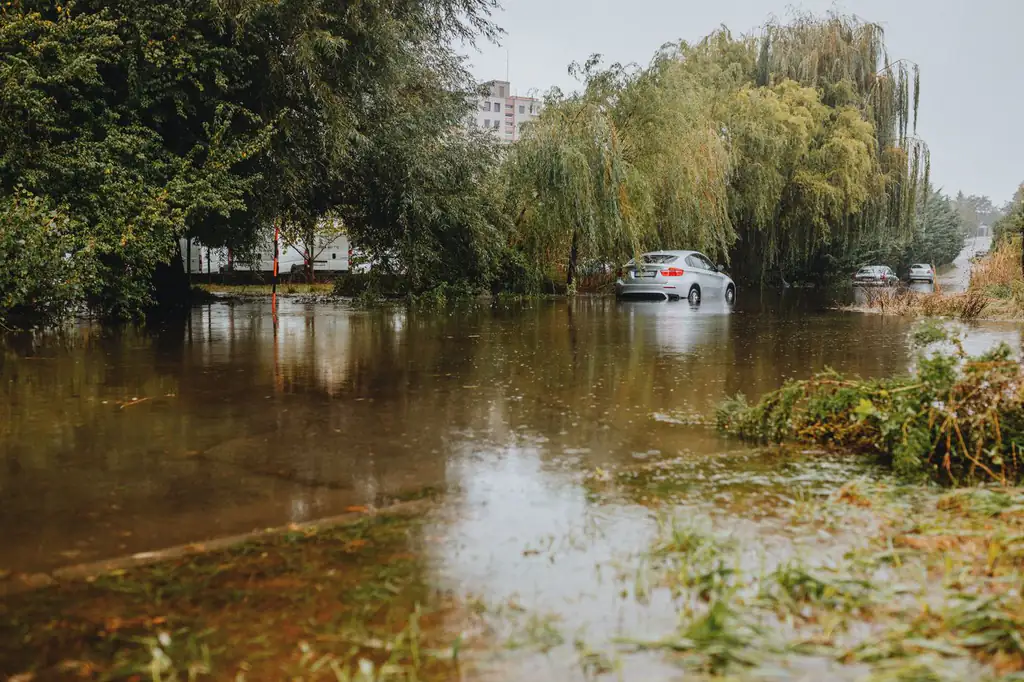
Why Does My Driveway Flood?
A driveway floods because it is a low spot or flat slope with nowhere to drain, often fed by runoff or a downspout. Find out why water collects before choosing a fix.
Problem–Solution Hub
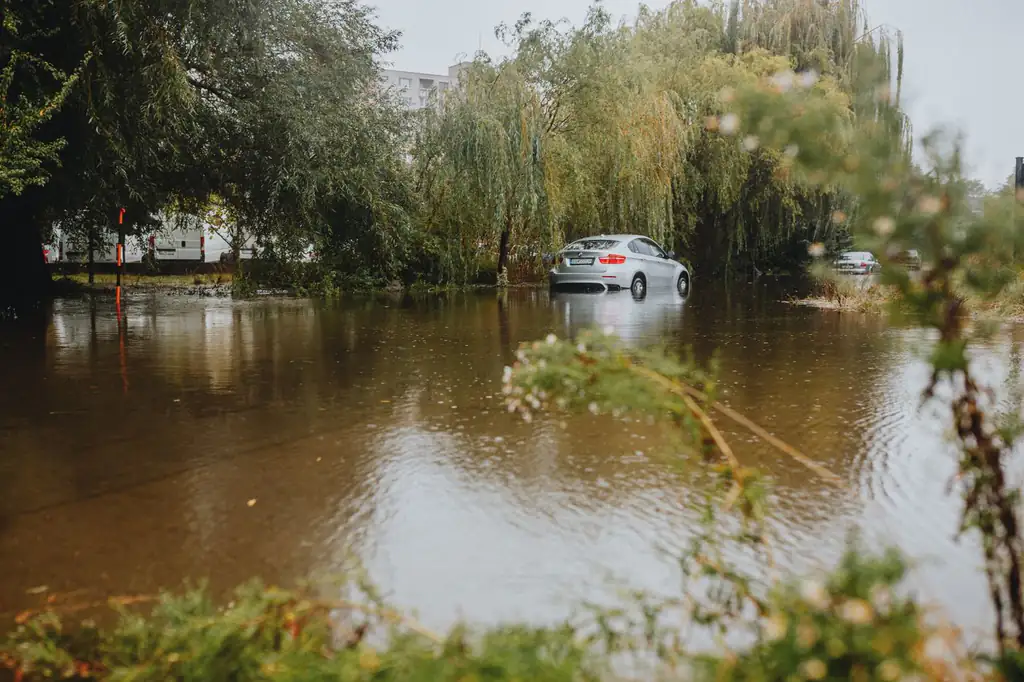
A flooding yard means water is arriving faster than the ground can absorb or shed it — from heavy rain, slow-draining soil, runoff from higher ground, or downspouts feeding the yard. Diagnose why water collects and where it comes from before choosing surface or subsurface drainage.
After a storm, the backyard disappears under a broad sheet of standing water, and it sits there long after the rain has passed. A flooding yard comes down to one thing: water is arriving faster than the ground can absorb or shed it. The short answer is that the cause is one or more of a familiar few — heavy or prolonged rain, slow-draining clay or compacted soil, runoff arriving from higher ground, and downspouts feeding water into the yard — usually made worse by flat ground with nowhere to drain. Because more than one factor is often at work, the job before choosing any drainage is to diagnose why water collects and where it comes from. Pick the fix that matches the cause, not the first drain you read about.
Every flooding yard is a balance of two forces: how fast water arrives and how fast the ground can absorb or shed it. Tip that balance — more water arriving, or slower drainage — and the yard floods. That framing is useful because it splits the diagnosis cleanly. Slow soil and flat ground are drainage-capacity problems; runoff and downspouts are water-arriving problems. Most yards have some of each, and knowing the mix is what tells you whether to reach for surface drainage, subsurface drainage, or simply a redirected downspout.
Heavy clay packs tightly and lets water through slowly; compacted soil, from traffic or construction, does much the same. Where the ground cannot absorb water at the rate it falls, rain sits on the surface. This is a capacity problem, and improving drainage in clay soil covers the specific challenges it brings.
Water needs somewhere lower to flow. A flat yard, or one with shallow low spots, has no path to shed surface water, so it pools and lingers. Even good soil floods if the water that lands on it has nowhere to go.
If the lot slopes toward the yard, or a neighbor’s property sheds toward it, the yard becomes a collection point for water that started elsewhere. Where the source is a neighbor, the situation carries its own complications, covered in neighbor runoff and property drainage.
Each downspout concentrates a large roof area into one stream. Discharging into the yard, it delivers far more water to that spot than rain alone, and several downspouts emptying into low areas overwhelm the ground fast. This is among the easiest causes to address — see how far downspouts should extend — and often worth fixing before anything larger.
Sometimes the ground is simply asked to take more than any soil could. A well-drained yard can still flood in an extreme storm. The question then is whether it drains within a reasonable time or stays flooded for days, the latter pointing back to the capacity problems above.
| What you see | Likely cause | How to confirm |
|---|---|---|
| Water sits for days; soil is dense and sticky | Slow-draining clay or compacted soil | Run a percolation test — water lingers in the hole |
| Water pools in the same low areas each storm | Flat ground or low spots with no outlet | Watch where water gathers; check the grade |
| Water sheets in from a slope or a neighbor | Runoff arriving from higher ground | Watch uphill during rain to trace the source |
| Flooding worst near downspout outlets | Downspouts dumping into the yard | Trace each downspout during a storm |
| Whole yard drains slowly after big storms only | Extreme rainfall exceeding capacity | Note how long it takes to clear afterward |
Two diagnostic moves do most of the work. Run a percolation test: dig a hole, fill it with water, and time how fast it drains — slow drainage points to a soil problem, fast drainage sends you toward too-much-water-arriving. Watch the yard during rain: see where water collects, where it comes from, and whether it has any path out. Together these separate a capacity problem from a delivery problem, which is the whole point.
Water reaching the house changes the priority. A flooded lawn is a nuisance, but water pooling against the foundation is a moisture threat to the structure, and it should be dealt with first — see water pooling near the foundation. When you watch the yard in a storm, pay special attention to whether any of the flooding is moving toward the walls of the house, because that part of the problem outranks the rest.
The short version: a yard floods when water arrives faster than the ground can absorb or shed it, and the fix depends entirely on which side of that balance is the problem. Run a percolation test, watch a storm, and trace your downspouts. Once you know whether you are dealing with slow soil, flat ground, incoming runoff, or downspouts — usually some combination — you can choose surface drainage, subsurface drainage, or a simpler redirection with confidence. When the project means major grading or subsurface work, or when water is reaching the house, that is the point to bring in a professional.
FAQ
Because water is arriving faster than the ground can absorb or move it away. Several things drive that: heavy or prolonged rain simply delivering more water than the soil can take, slow-draining clay or compacted soil that holds water rather than soaking it in, runoff arriving from higher ground or a neighbor, and downspouts dumping concentrated roof water into the yard. Flat ground with nowhere to shed water makes any of these worse. Usually more than one factor is in play, and identifying which ones apply to your yard is the key to choosing a fix that works.
Soil is one cause, not the whole story. Heavy clay and compacted ground do drain slowly and hold water, but a yard can flood even with decent soil if it is flat, sits low relative to its surroundings, or receives runoff and downspout water faster than it can shed. That is why diagnosis looks at both how well the ground drains and how much water is arriving and from where. Treating it purely as a soil problem can lead to fixes that miss the real driver, such as a downspout or runoff from uphill.
Combine a soil test with storm-watching. Run a percolation test — dig a hole, fill it with water, and time how fast it drains — to see whether slow soil is a factor. Then watch the yard during rain to see where water collects, where it arrives from, and whether it has any path out. Trace your downspouts to see whether they discharge into the yard. Between the soil test and the rain-watch, you can separate a drainage-capacity problem from a too-much-water-arriving problem, which points to different solutions.
They can contribute a lot. Each downspout concentrates a large area of roof into one stream, and if it discharges into the yard it delivers far more water to that area than rain alone. Several downspouts emptying into low spots can overwhelm the ground quickly. This is also one of the easiest causes to address — extending or redirecting discharge to somewhere that drains, or into a proper drainage system, can noticeably reduce flooding with no major excavation. It is worth checking every downspout before planning a larger drainage project.
Surface drainage moves water sitting on top of the ground — regrading, swales, and catch basins that collect and carry away pooling water. Subsurface drainage, like a French drain, intercepts and moves water through the soil, which suits slow-draining ground where water lingers below the surface. The right choice depends on your diagnosis: a low spot collecting runoff points toward surface solutions, while heavy clay holding water points toward subsurface. Many yards use a combination, but matching the type to the cause is what keeps the project from disappointing.
It can, when the problem is that water has nowhere to flow. Regrading and swales shape the ground so water runs toward a safe outlet instead of collecting in low spots. That is the right fix when flat ground or low areas are trapping surface water. But regrading does little for slow-draining soil that holds water in place, or for a downspout dumping more water than any grade can shed. So it is a strong tool for some causes and the wrong one for others, which is why diagnosis comes before you move any dirt.
Consider a pro when flooding is severe or persistent, when it involves regrading or installing subsurface drainage, when water is reaching the house or foundation, or when the source is runoff from a neighbor or a large slope that needs a broader plan. You can and should handle the easy diagnostics and source fixes yourself — percolation testing, storm-watching, redirecting downspouts. But large-scale grading, French drains, and connecting to a safe outlet are involved projects where a professional's assessment of soil, slope, and outlet options saves costly missteps.
Keep reading
A driveway floods because it is a low spot or flat slope with nowhere to drain, often fed by runoff or a downspout. Find out why water collects before choosing a fix.
Water on the garage floor after rain usually enters from outside — a driveway that slopes in, a bad threshold seal, or a downspout at the corner. Find the entry point first.
Water pools at a downspout when it dumps more water than the ground can take right there — from short discharge, flat soil, or a blocked line. Diagnose the cause before adding drainage.